How the Budget Is Calculated
- A. The system retrieves the target entered for the store and month.
- B. If data corresponding to the current month is available, the system retrieves the daily and commercial category participation values from the same month of the previous year, respecting the days of the week and national holidays with fixed dates.
- Example: The current month is 09/2019, so the calculation will be based on data from 09/2018.
- Events based on days of the week, such as “Mother’s Day” and “Produce Wednesday,” are automatically considered by the system.
- C. If no data is available for the current month, the system calculates the values based on the previous month.
- Example: The current month is 09/2019, so the calculation will be based on data from 08/2019.
- D. The entered average is used to calculate purchases, losses, breakage, and product consumption.
Margin = 100 – (totalCustoComImposto / (totalVenda / 100) The Loss, Breakage, and Consumption displayed in Controllership are based on Purchases because they are directly related to the purchase of goods. Their averages are also added to COGS so that the Purchase Limit is more accurate and complete. The Loss, Breakage, and Consumption displayed in Analytics are based on Sales, allowing these percentages to be analyzed in relation to the sales completed. Click here to watch the Complete Video.
- Portal
- Mobile
How to Create a Budget
Follow the step-by-step instructions below to create a Budget.-
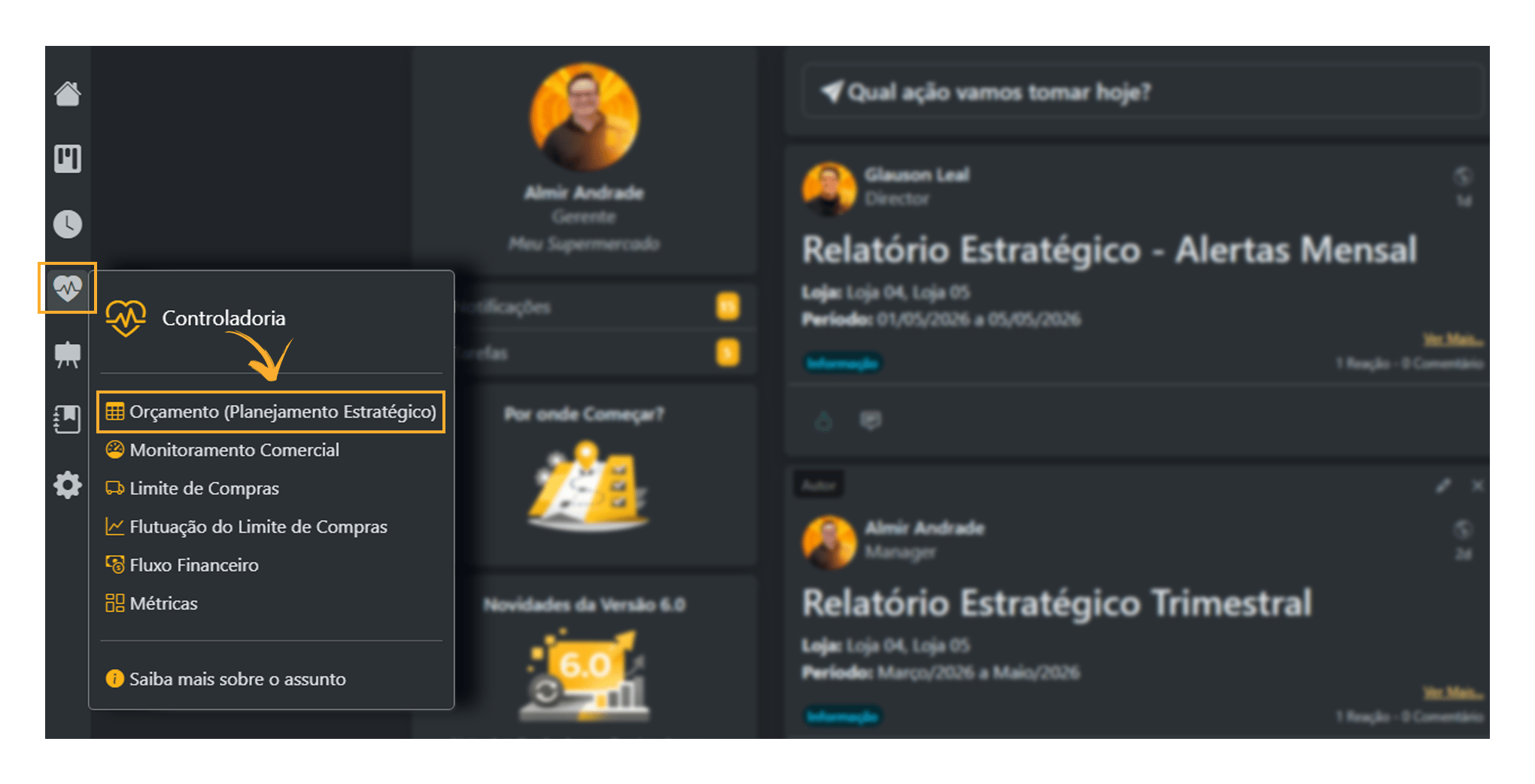
Controllership > Budget
-
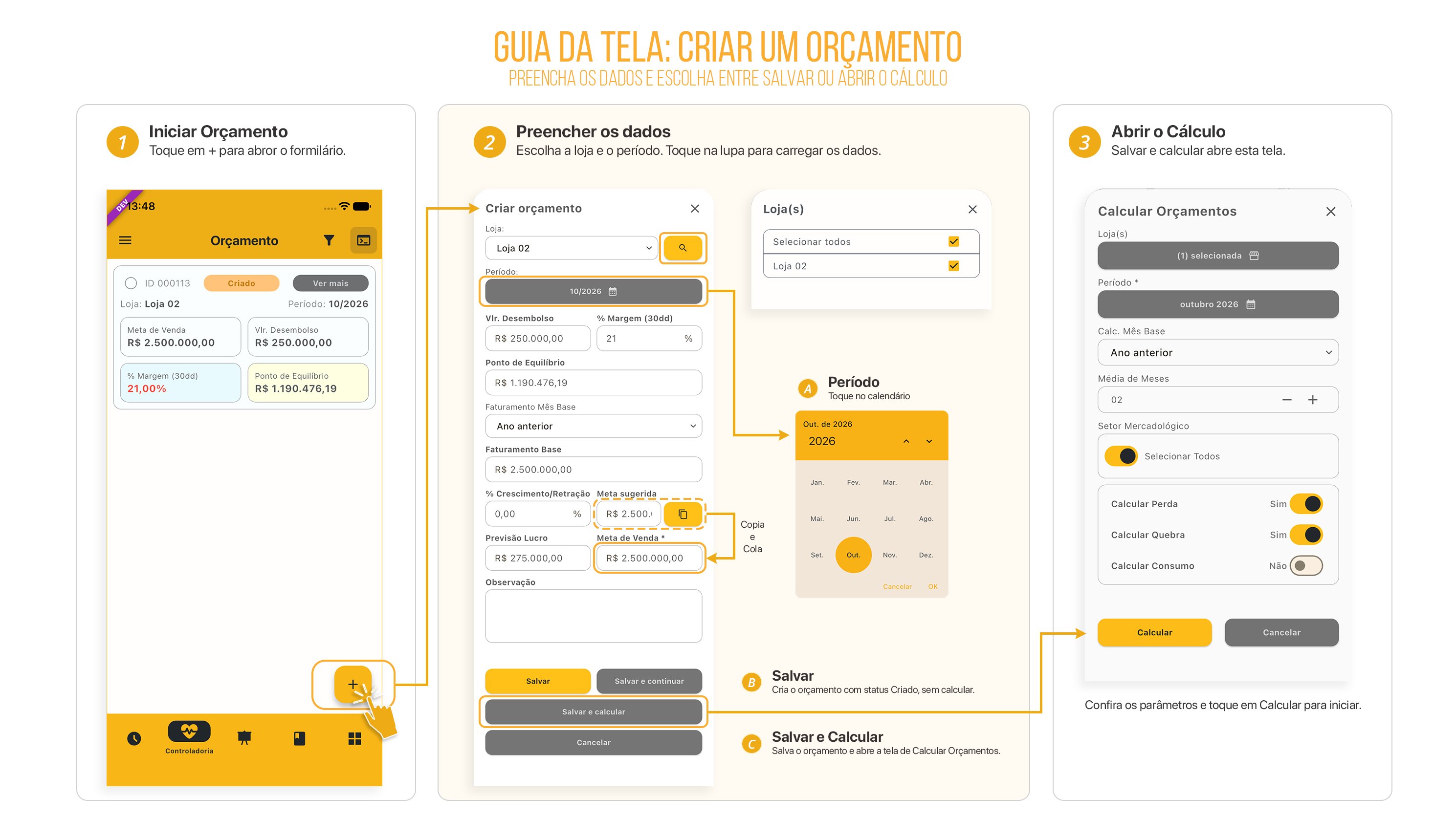
Click the Create Budget button.
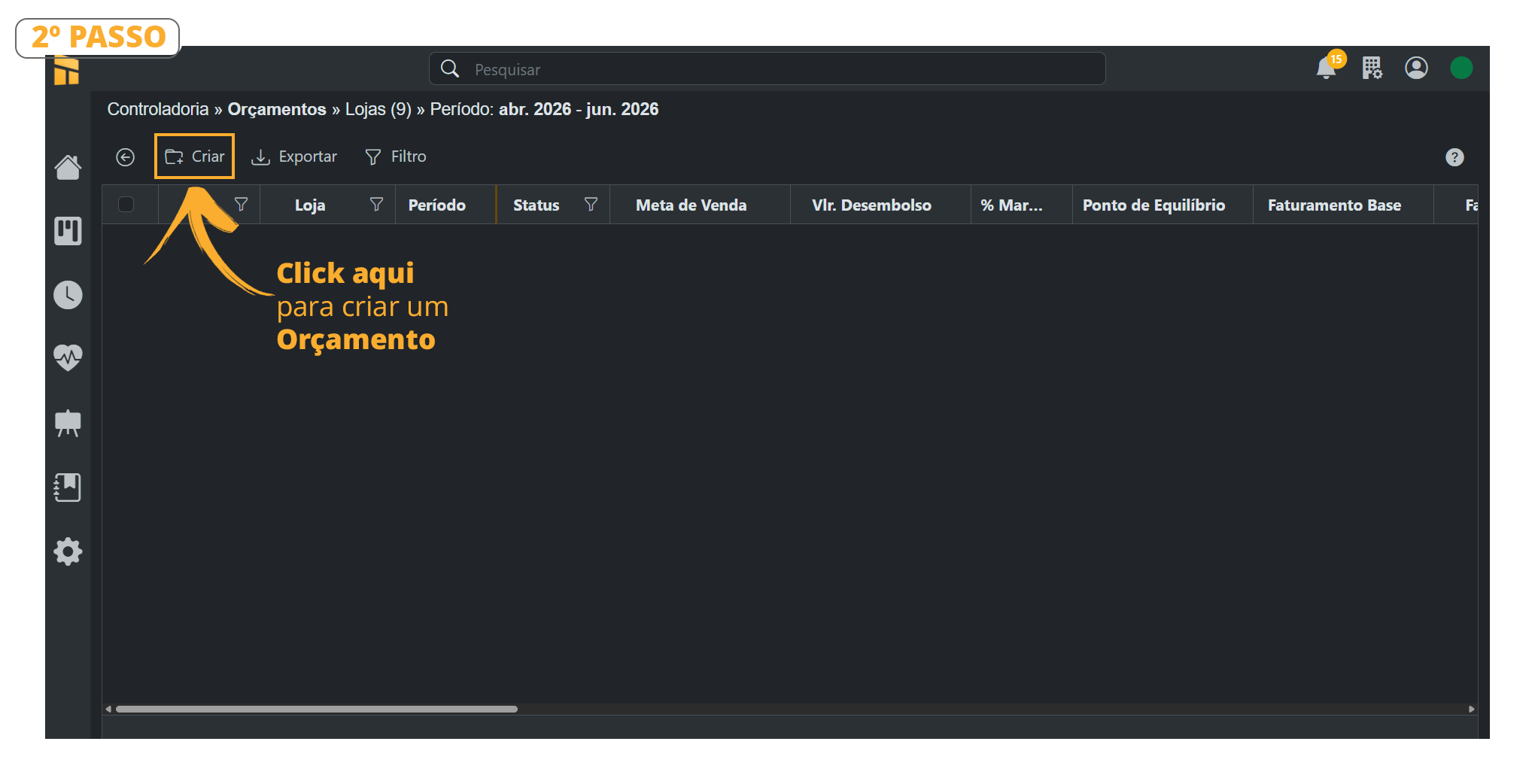
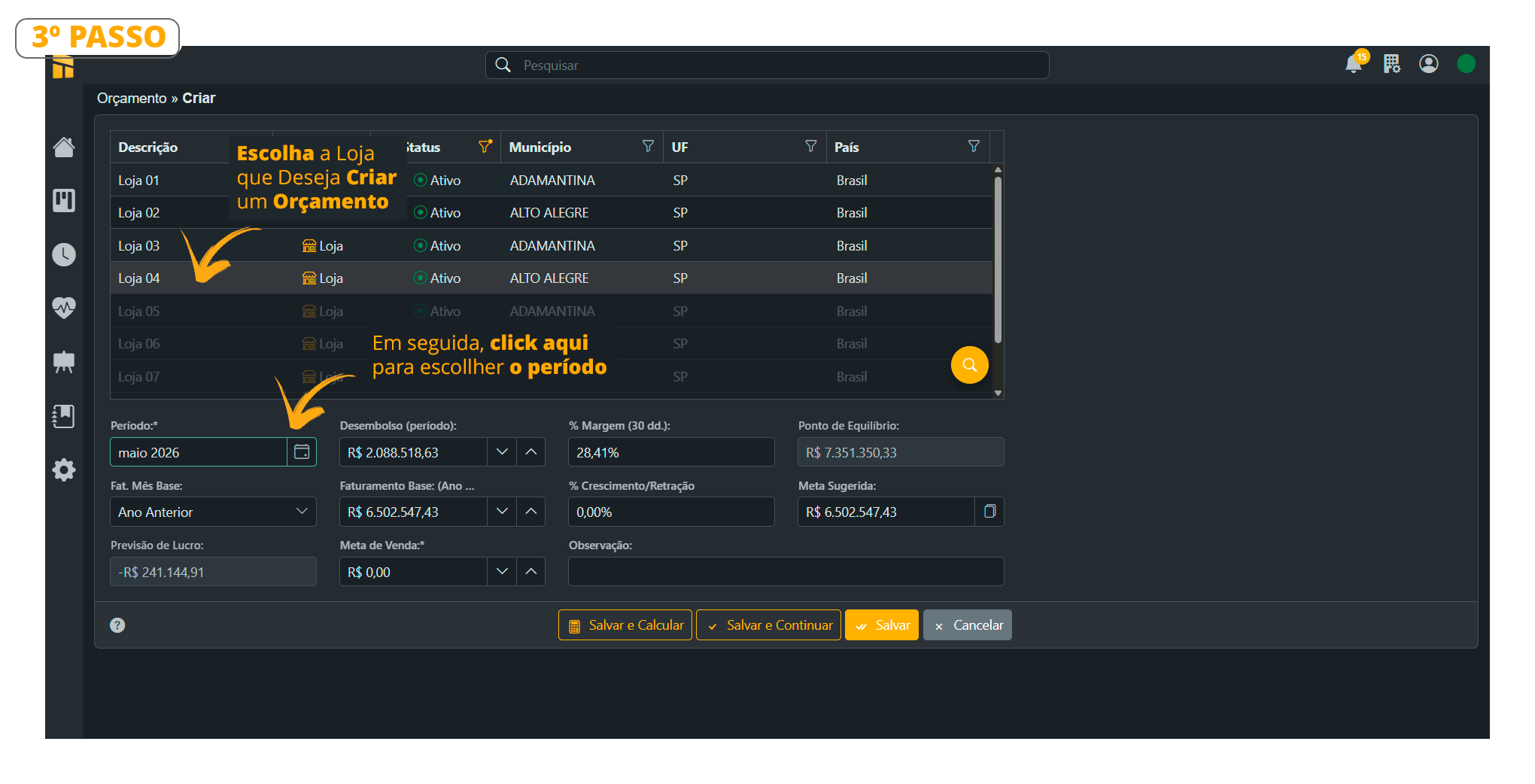
- Select the store for which you want to create the Budget, as shown in the image below, and then define the period.
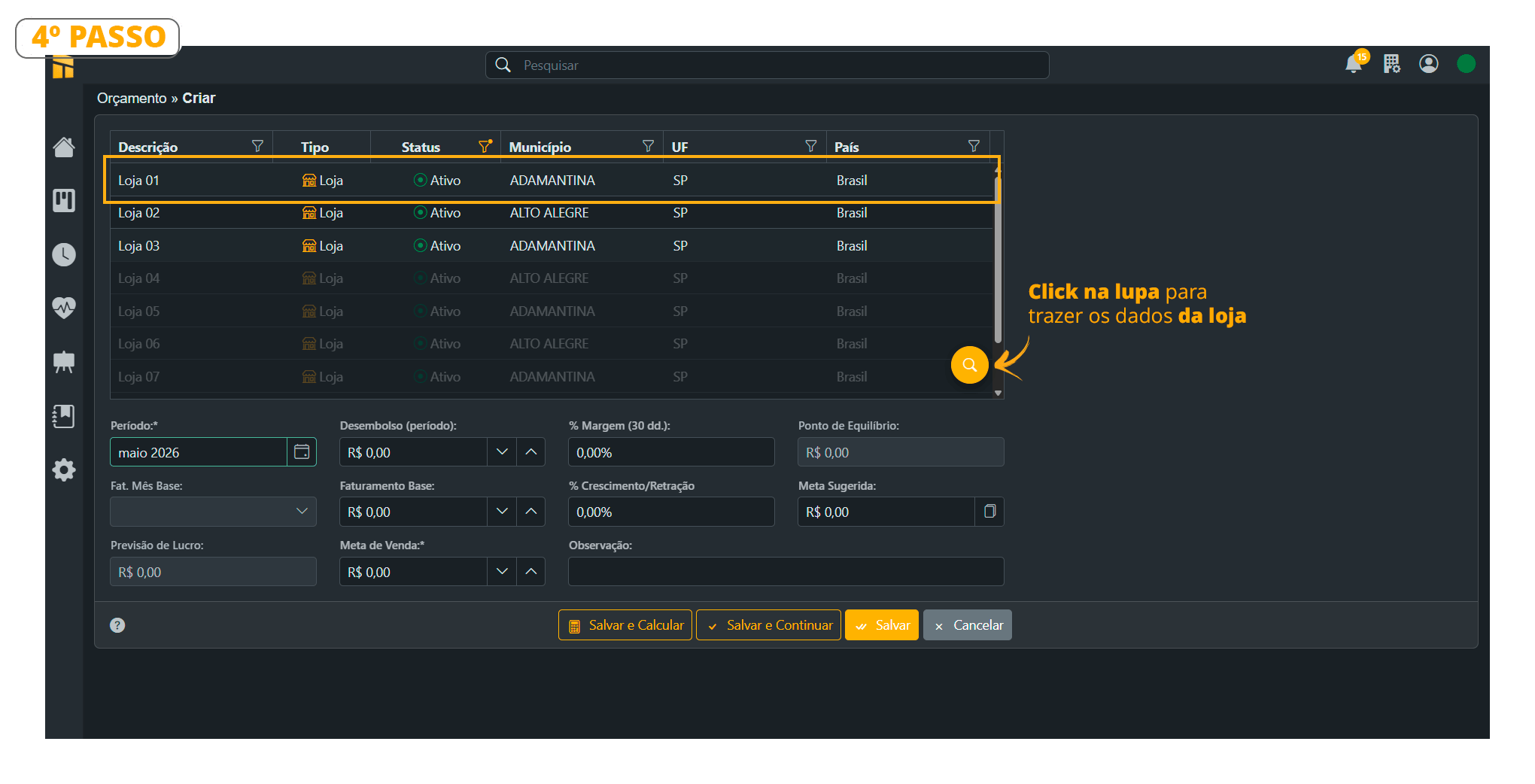
- Next, click the magnifying glass, as shown in the image below. The data will be calculated automatically.
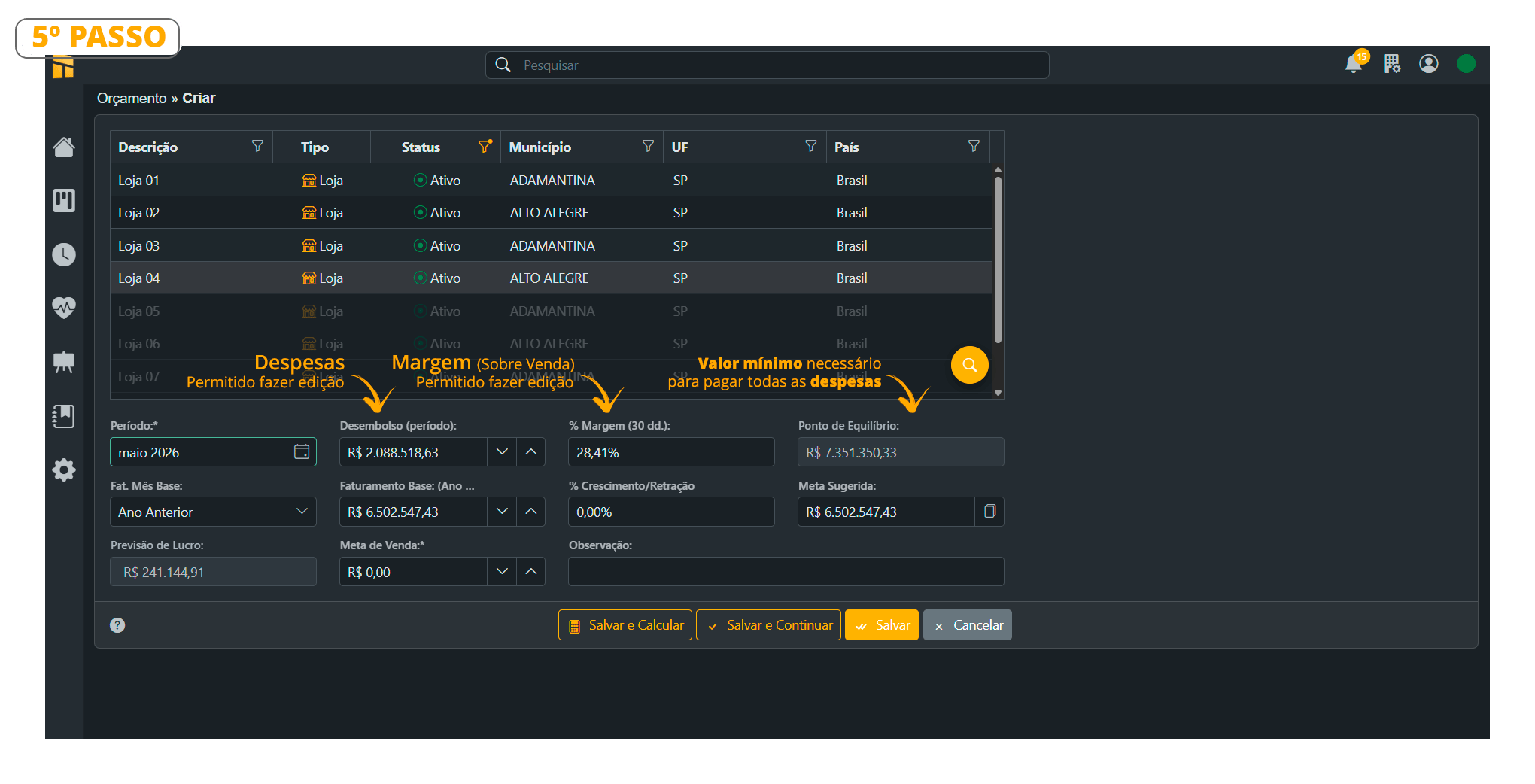
- Carefully review each field indicated in the image below.
- As shown in the image below, enter a value for the growth rate. When you enter the rate, a value will be calculated automatically in the Suggested Target field. In this example, we used a 10% rate.
- The month has 31 days
- PeriodStart = 22/06/2026
- PeriodEnd = 22/07/2026
Result for 23/07/2026
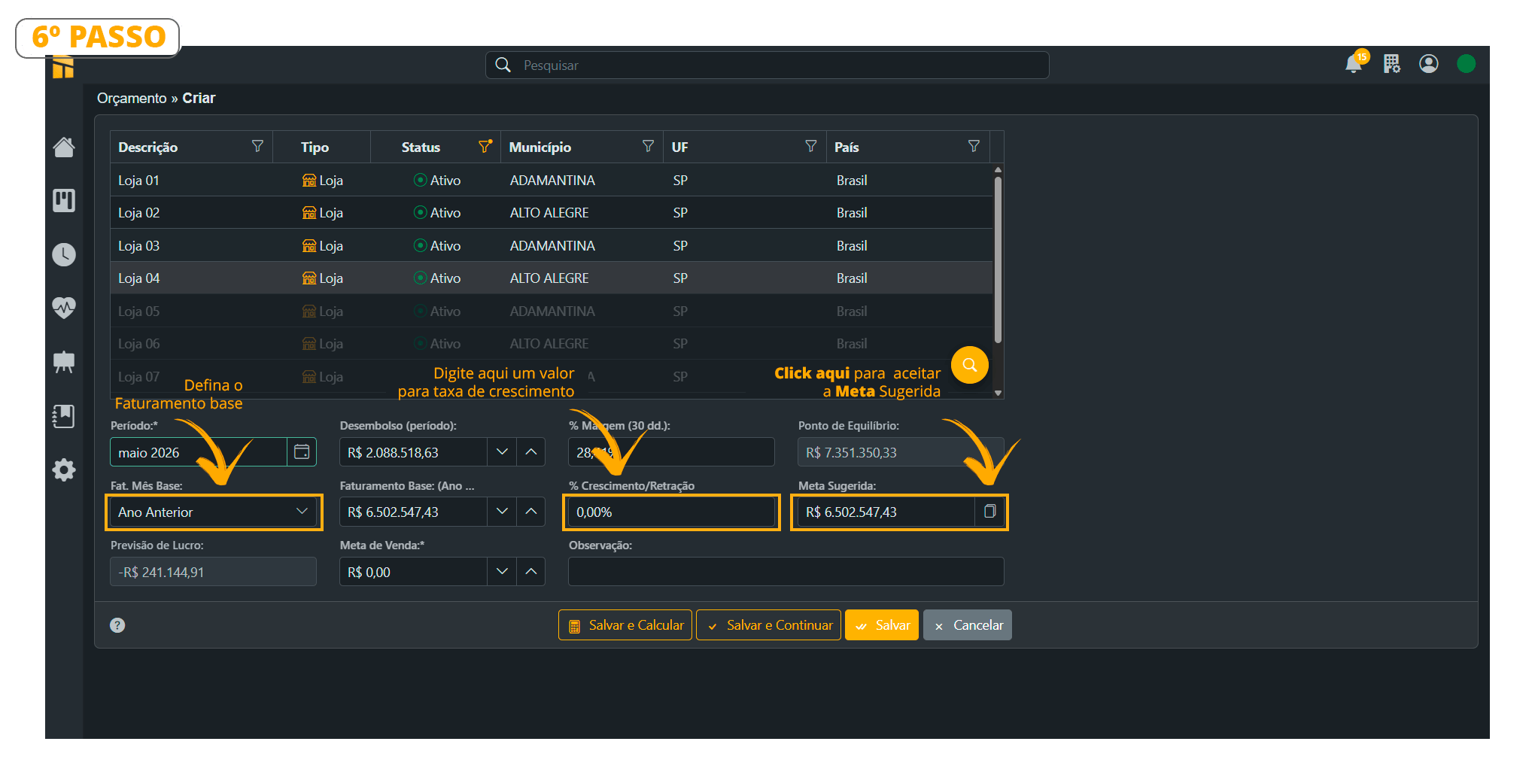
- Clicking the button indicated in the image above copies the values from Suggested Target and automatically pastes them into the Sales Target field. You can also adjust the value manually.
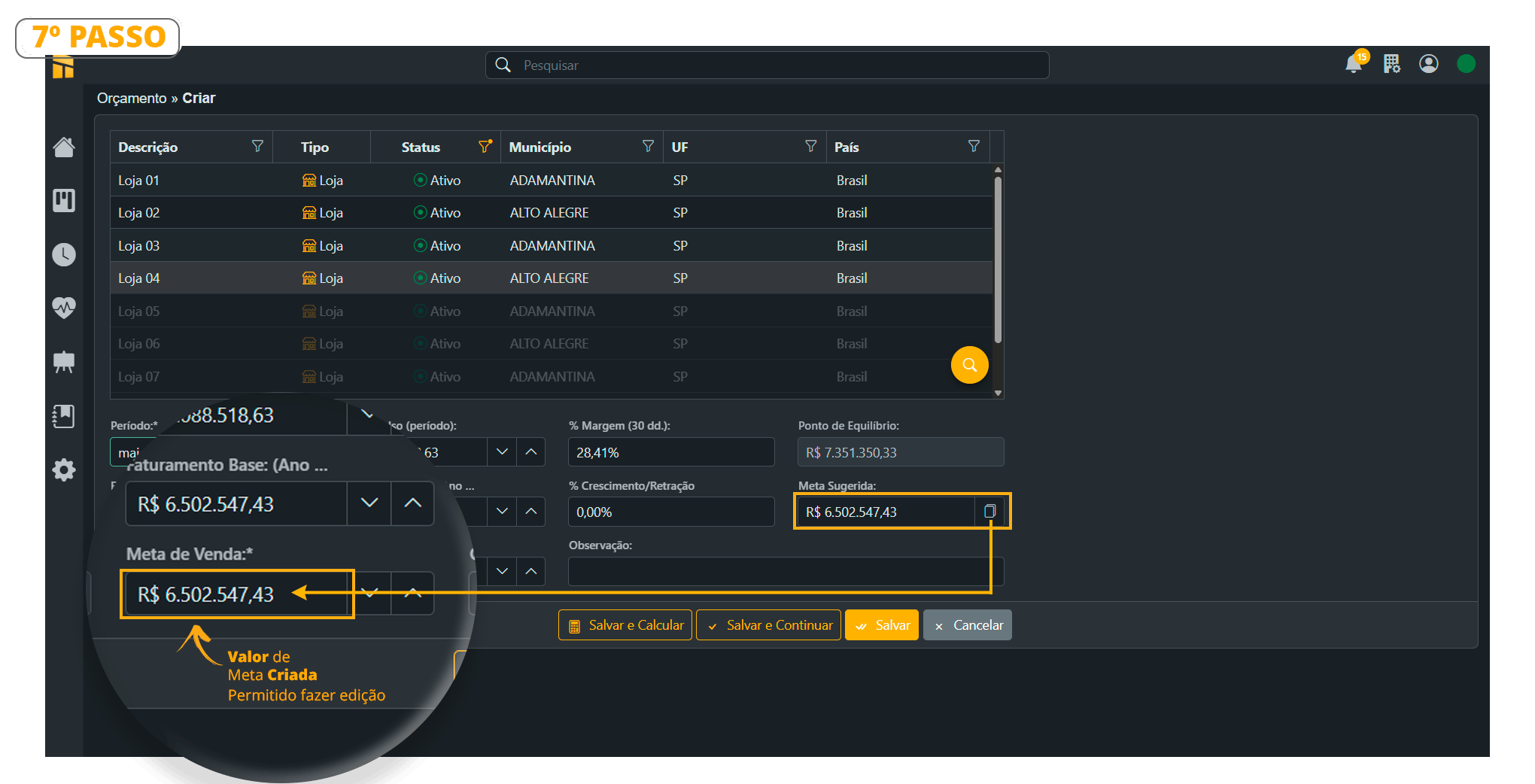
The [Save and Calculate] button takes you directly to step 11. The [Save and Continue] button saves the budget and keeps the same window open so you can create another budget.
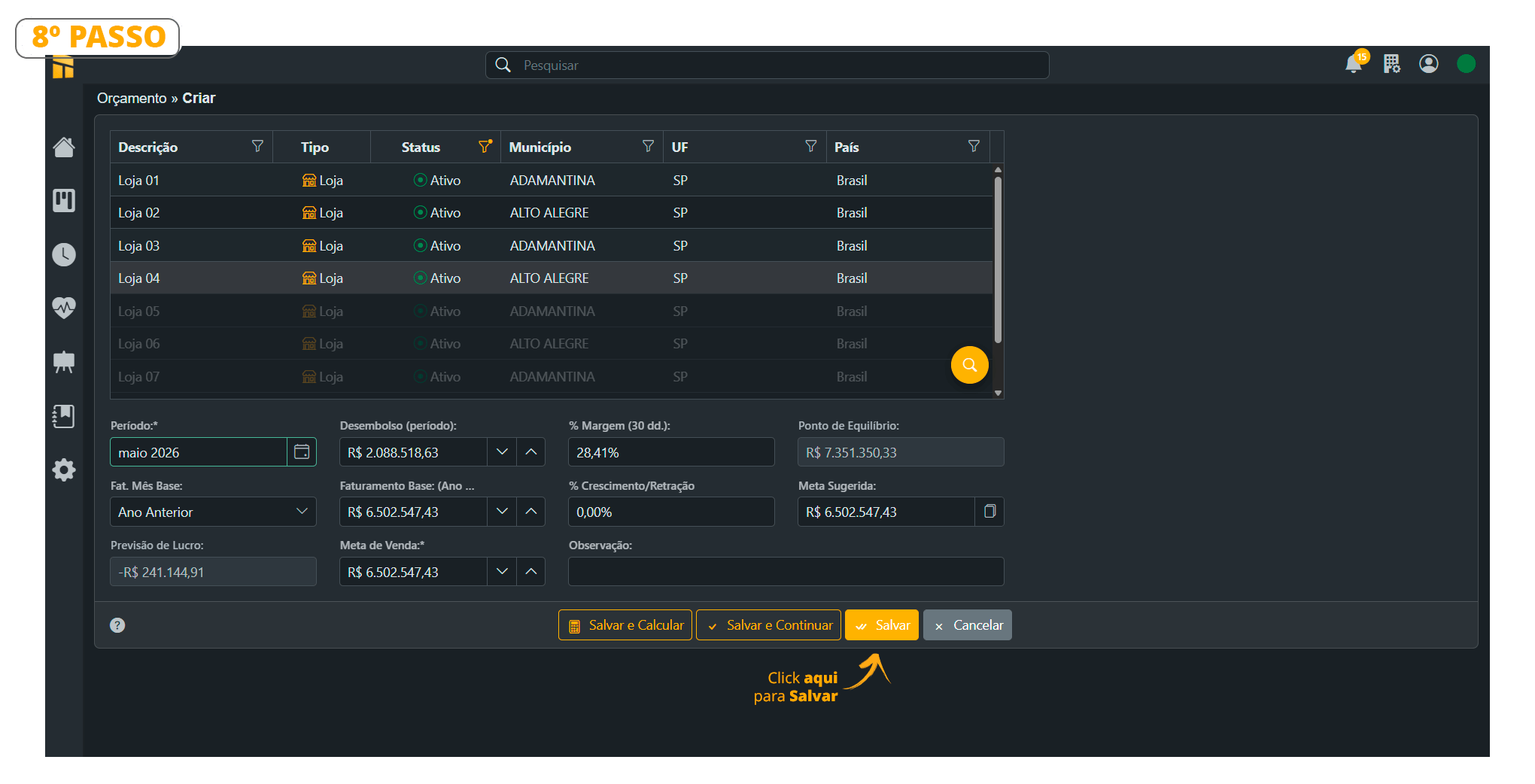
- The budget has been successfully Created.
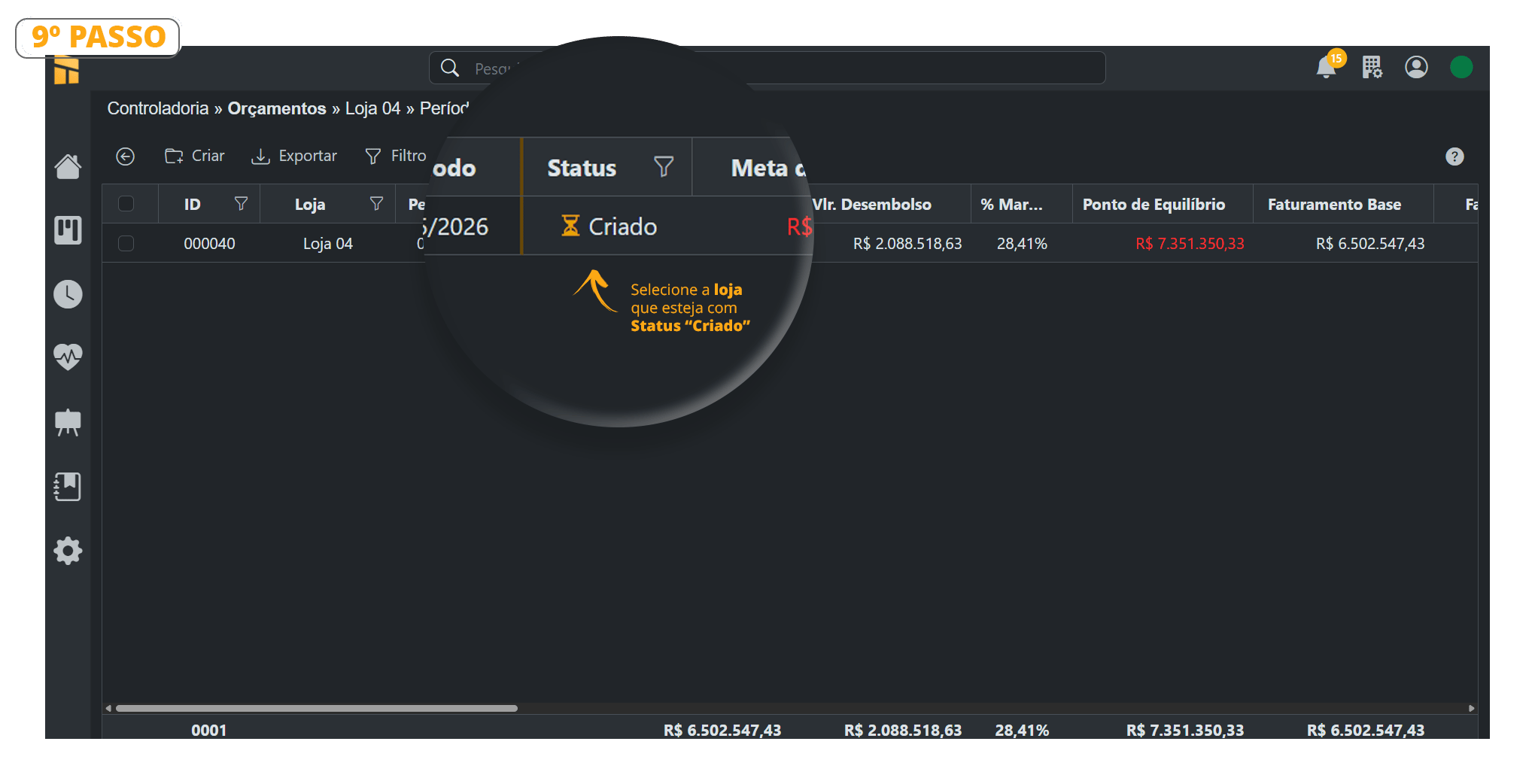
- To generate the reports, the budget must be calculated.
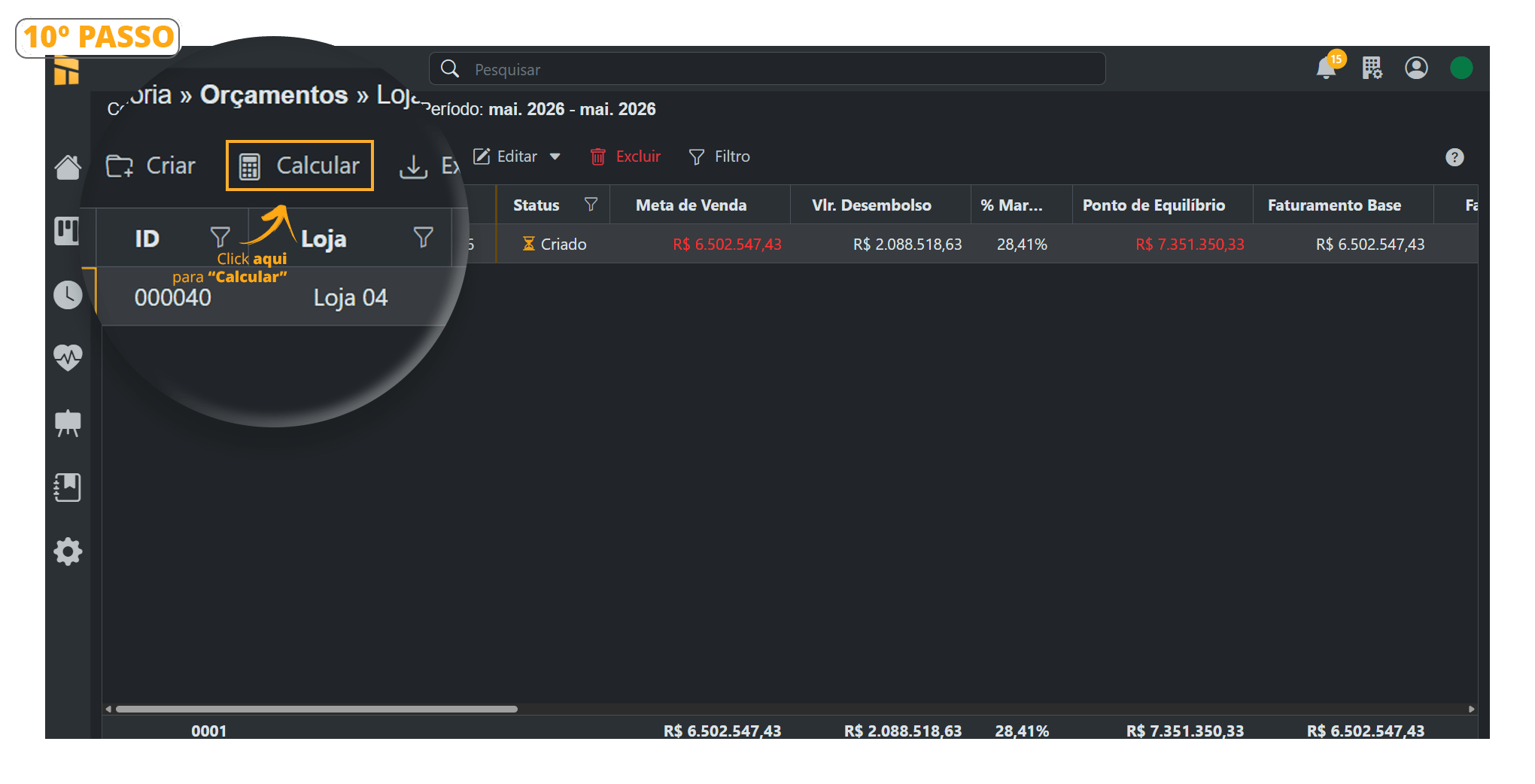
- You can select more than one store at the same time.
Click the Calculate button.
The Loss, Breakage, and Consumption displayed in Controllership are based on Purchases because they are directly related to the Purchase of Goods. Their averages are also added to COGS so that the Purchase Limit is more accurate and complete.
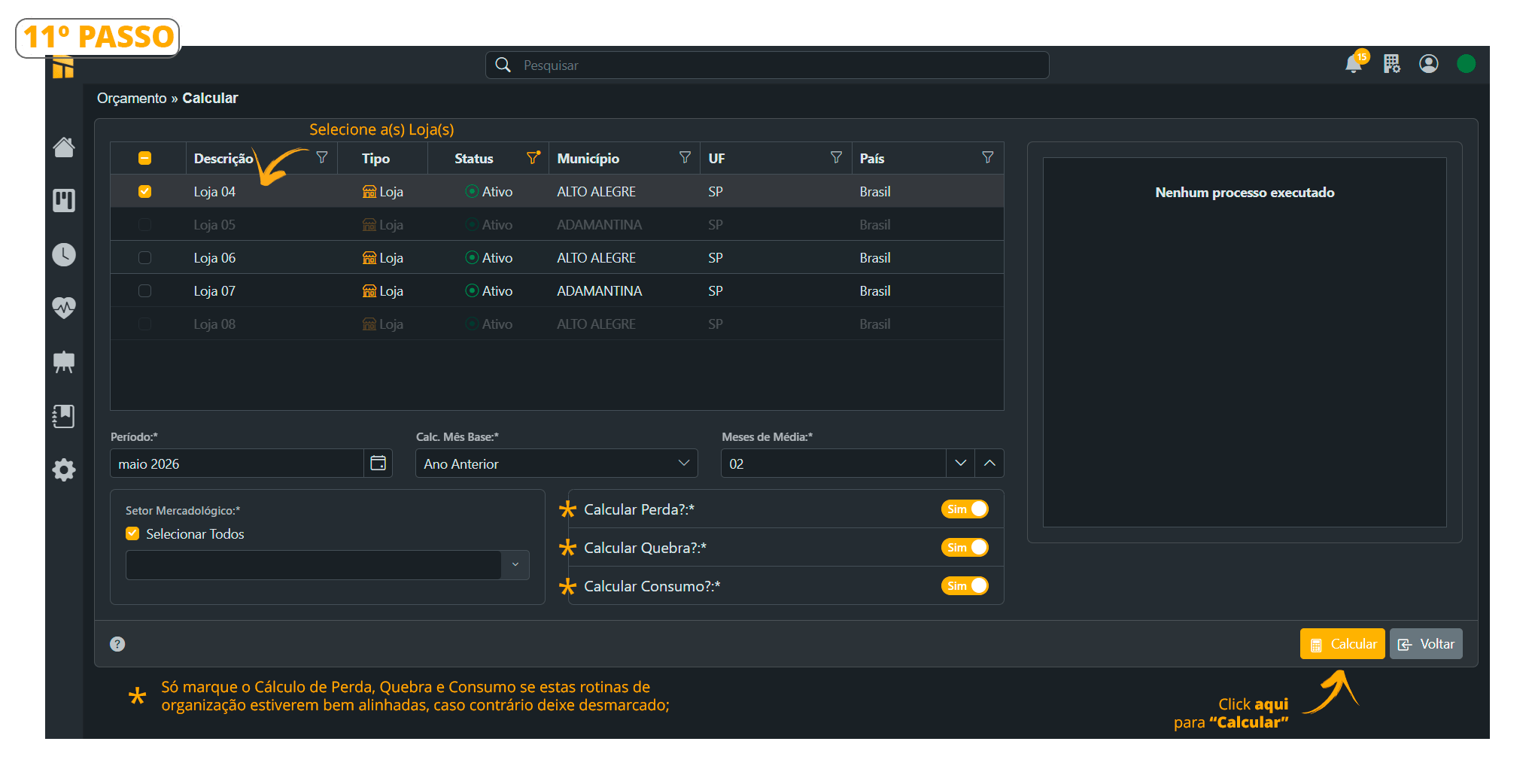
- The plan has already been calculated. Click the back button.
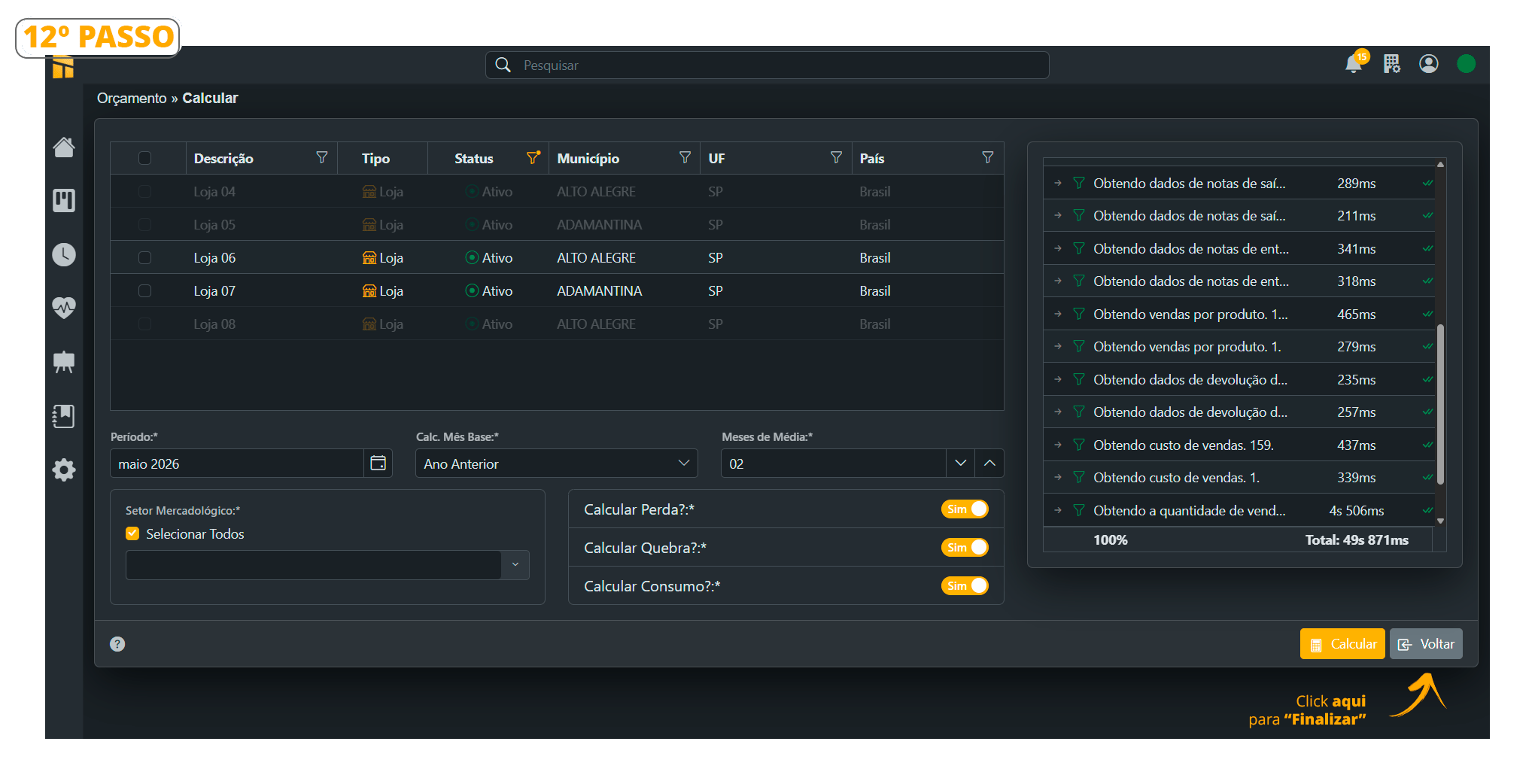
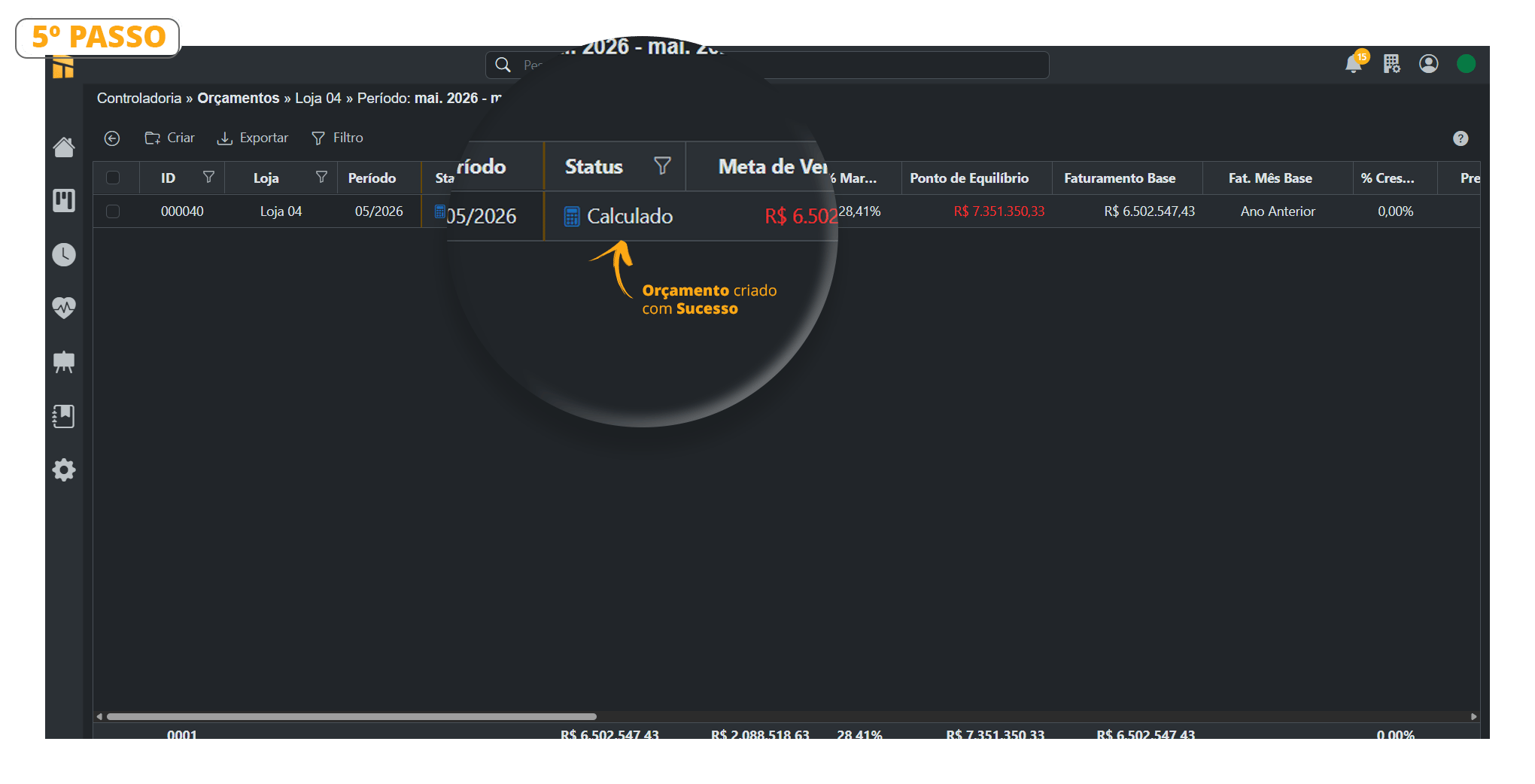
- The budget has been completed successfully. Its status is now Calculated.
How to Calculate a Budget
Follow the step-by-step instructions below to calculate a Budget.- Controllership > Budget
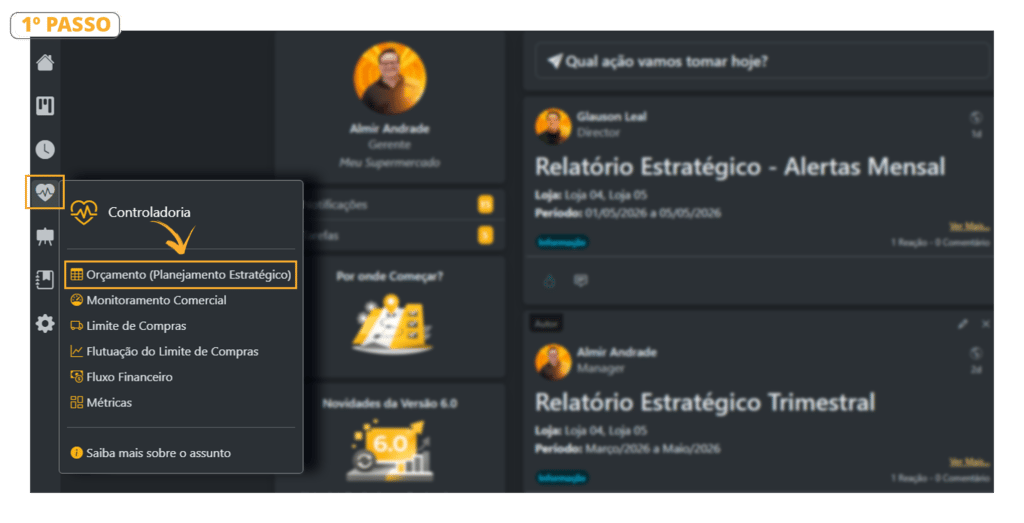
- Select the store whose Budget you want to Calculate. The Calculate button only appears after you select a store.
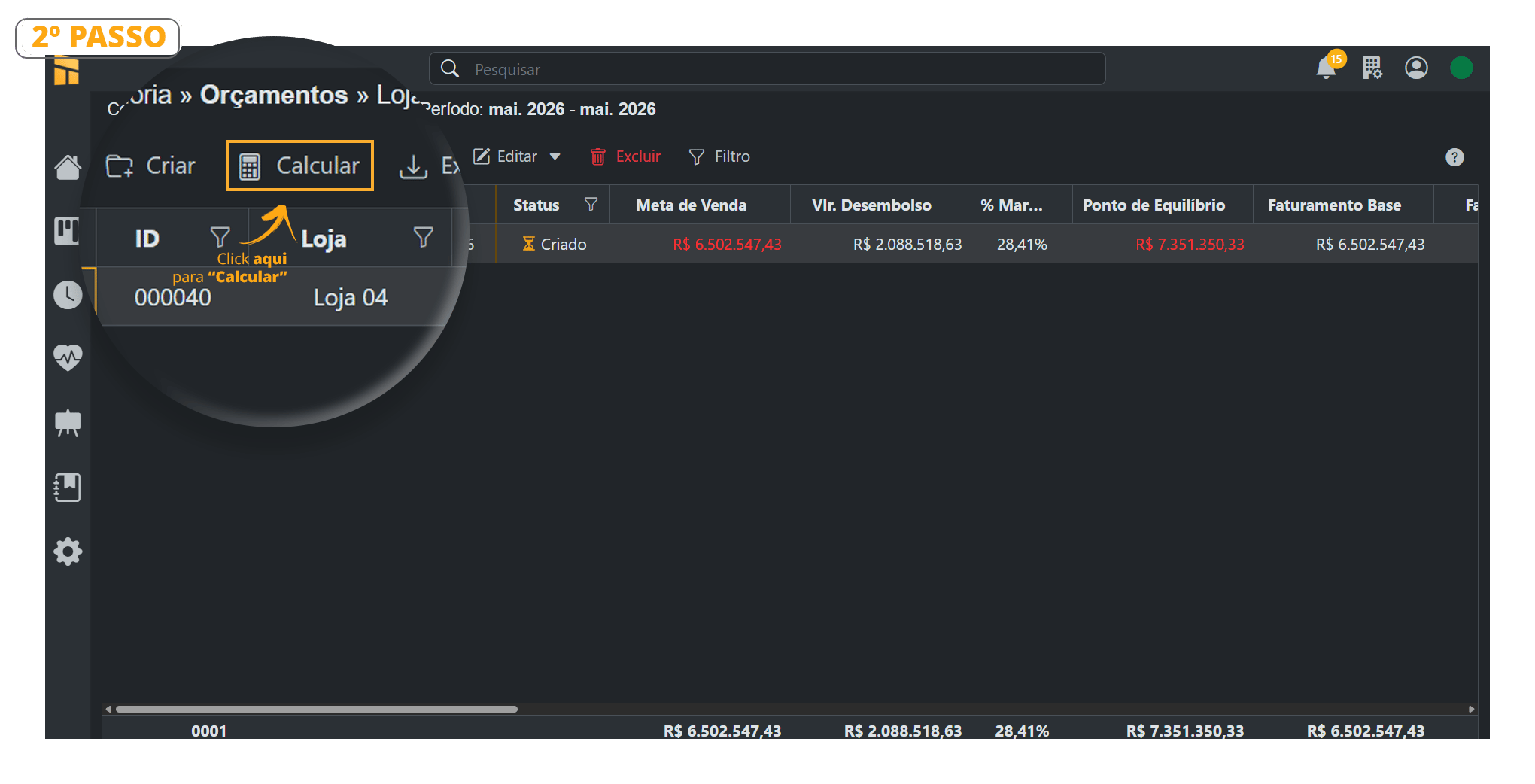
- You can select more than one store at the same time.
Click the Calculate button.
The Loss, Breakage, and Consumption displayed in Controllership are based on Purchases because they are directly related to the Purchase of Goods. Their averages are also added to COGS so that the Purchase Limit is more accurate and complete.
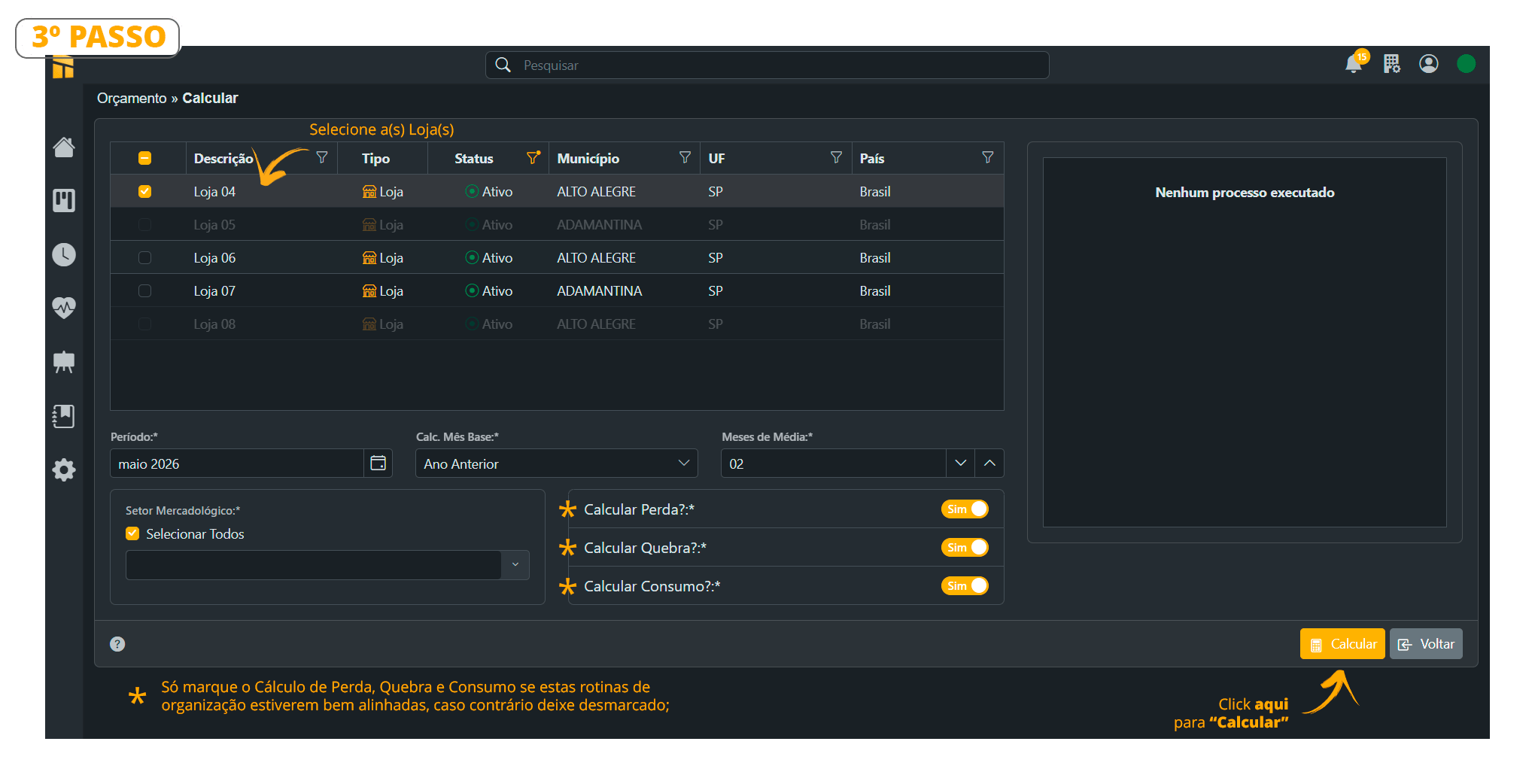
- The plan has already been calculated. Click the back button.
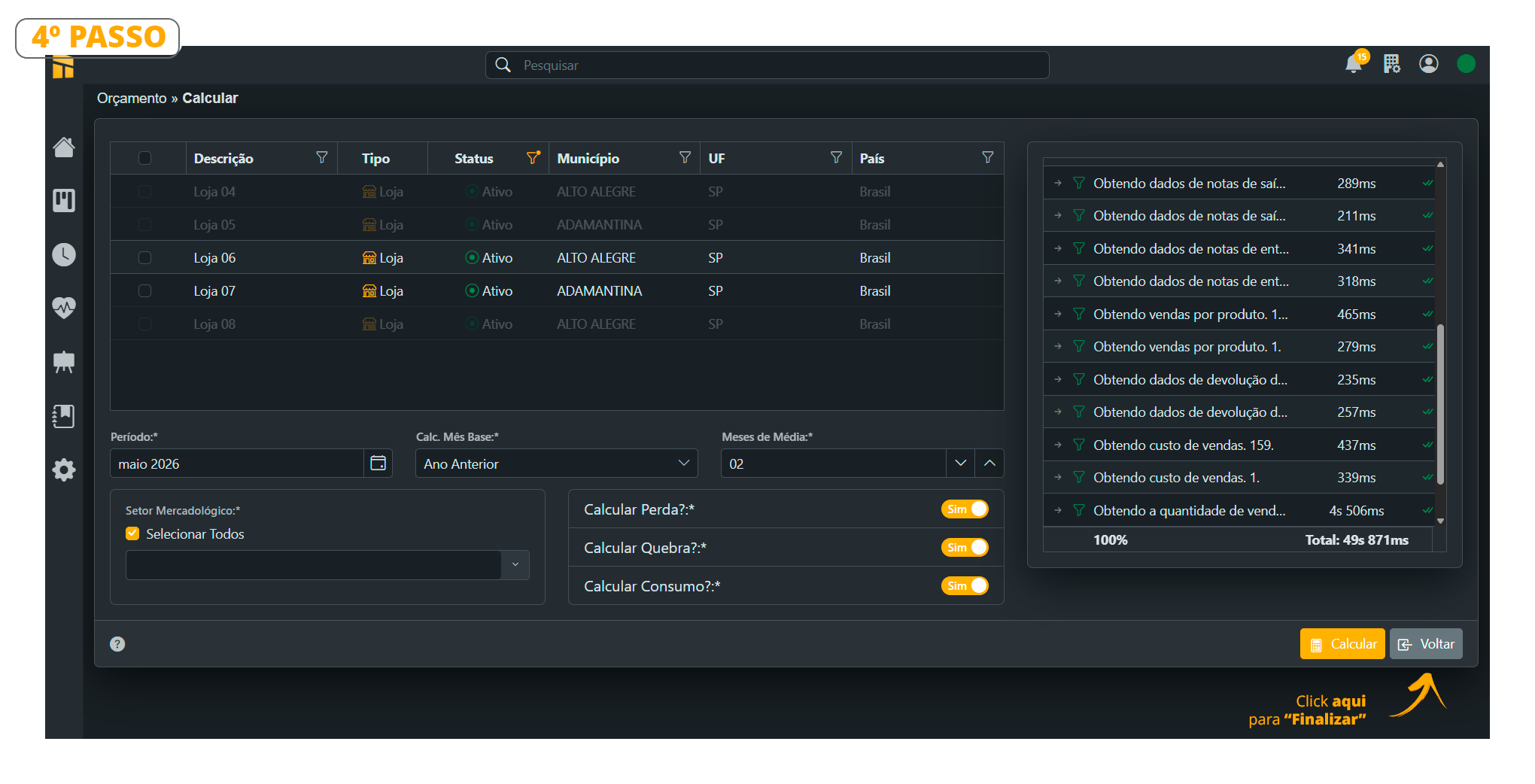
- The budget has been calculated successfully. Its status is now Calculated.
How to Change or Recalculate a Budget
Follow the step-by-step instructions below to recalculate a Budget.- Controllership > Budget
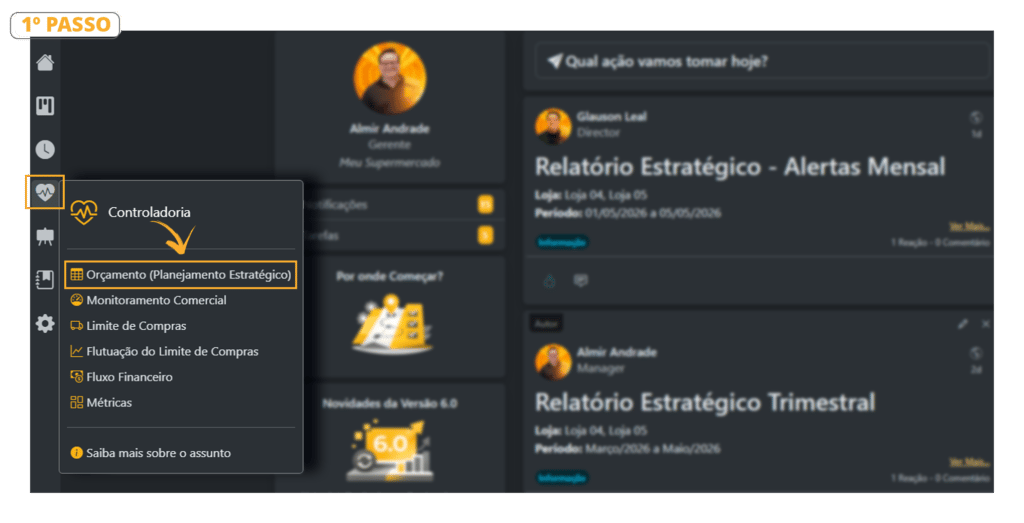
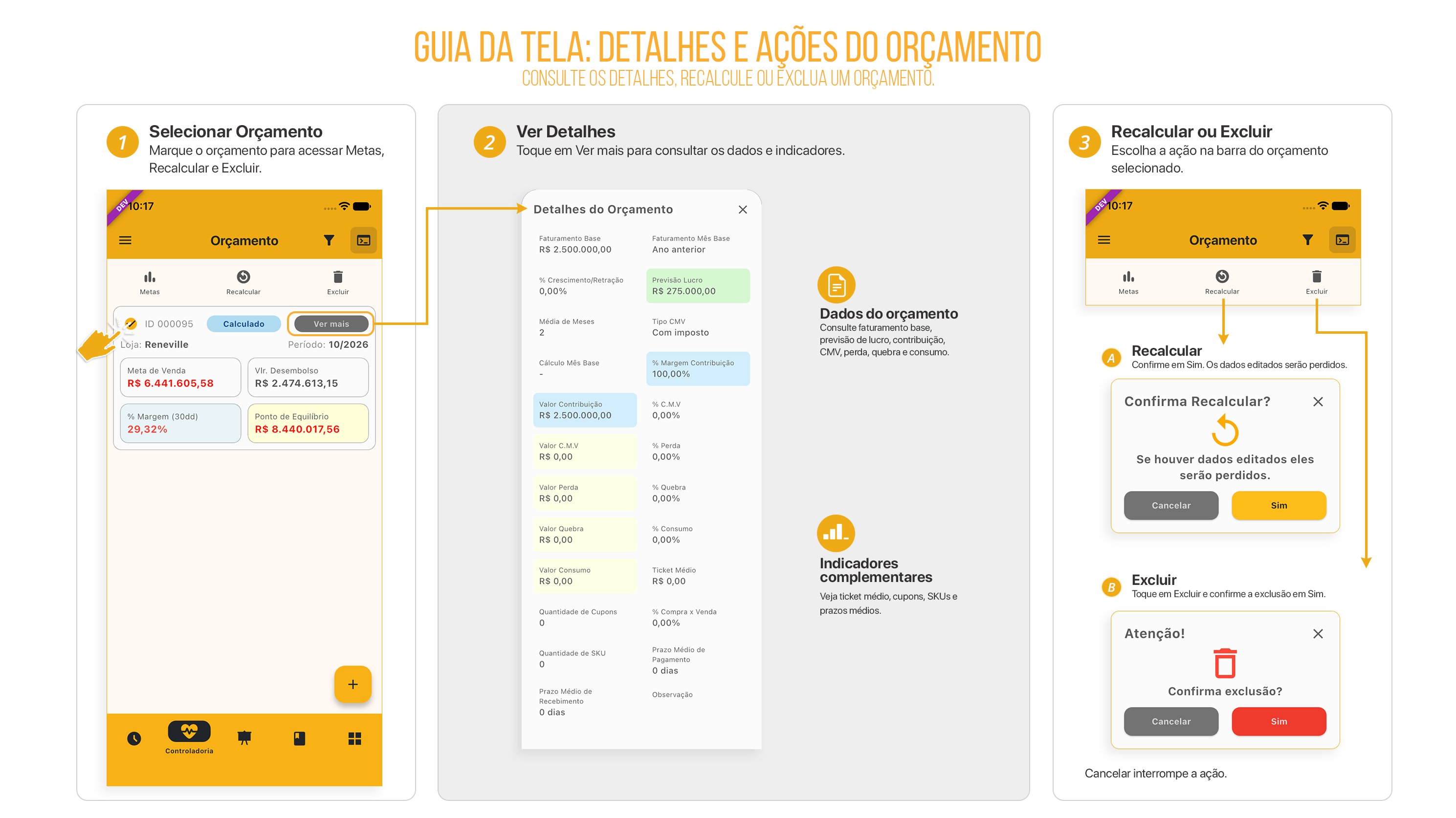
- Select the store whose Budget you want to Change. The Change button only appears after you select a store.
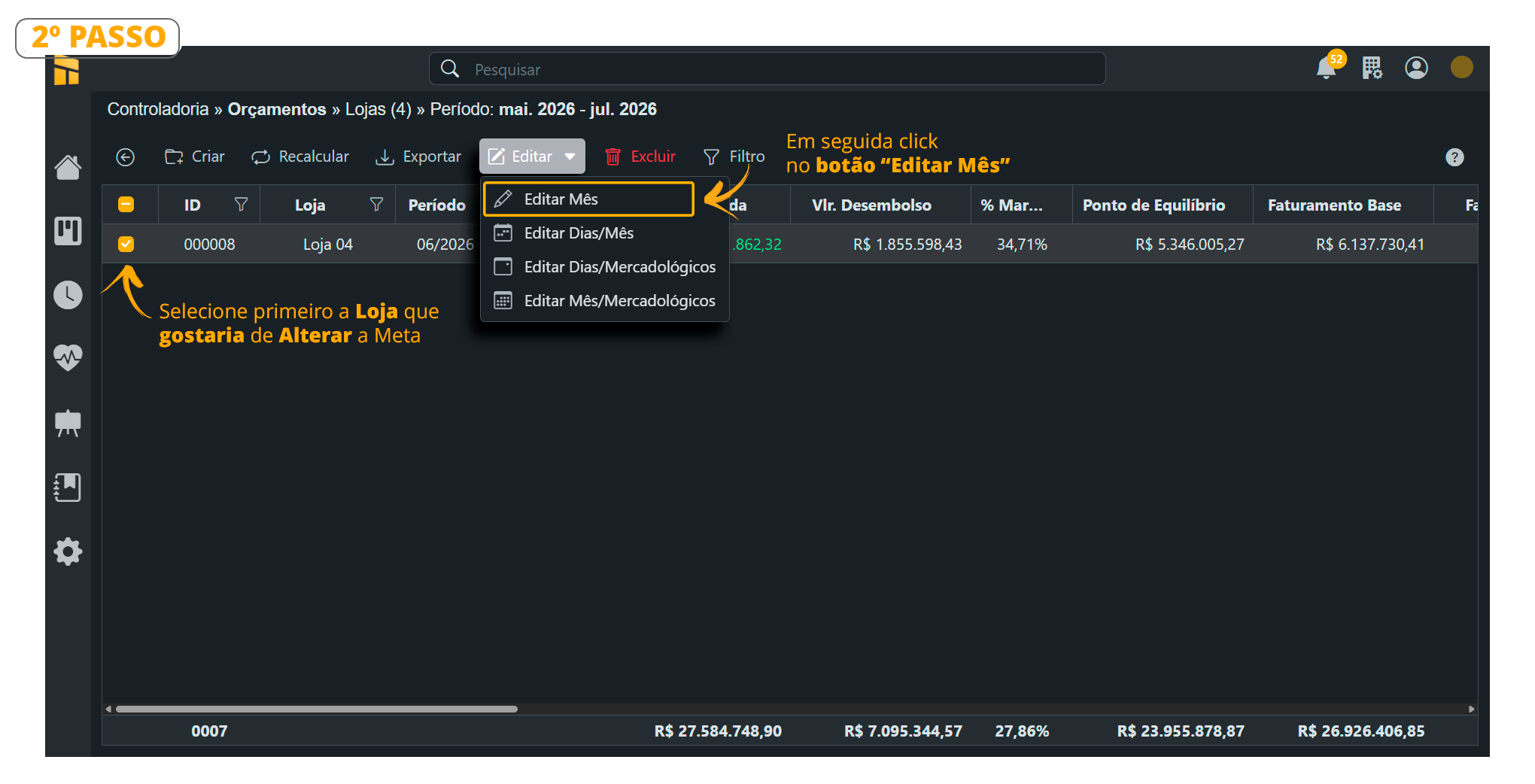
- Carefully review the fields below. Fields marked with colors can be edited.
To complete the changes, click SAVE.
Contribution Margin Calculation:
Margin = 100 – (totalCustoComImposto / (totalVenda / 100)
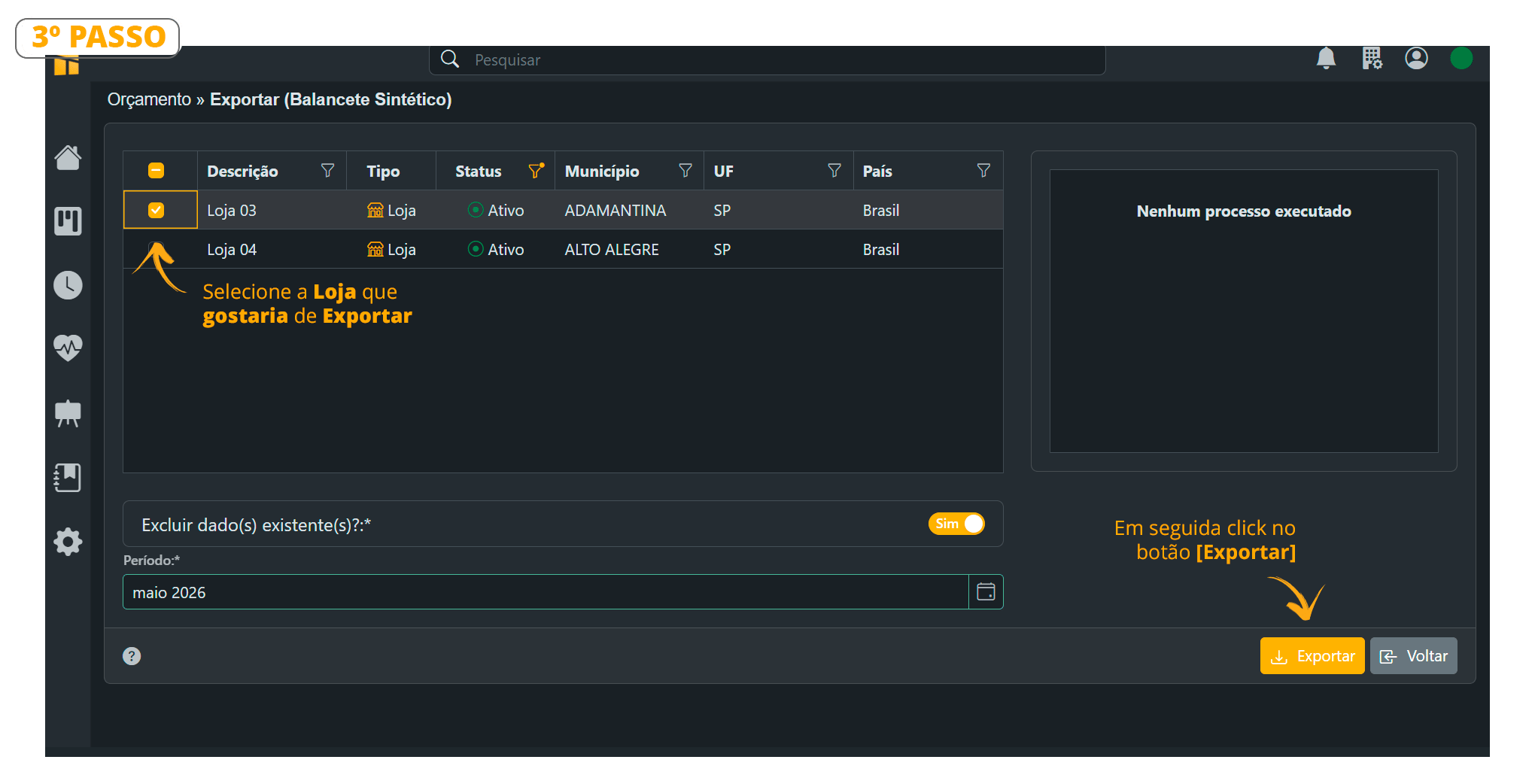
How to Export a Budget
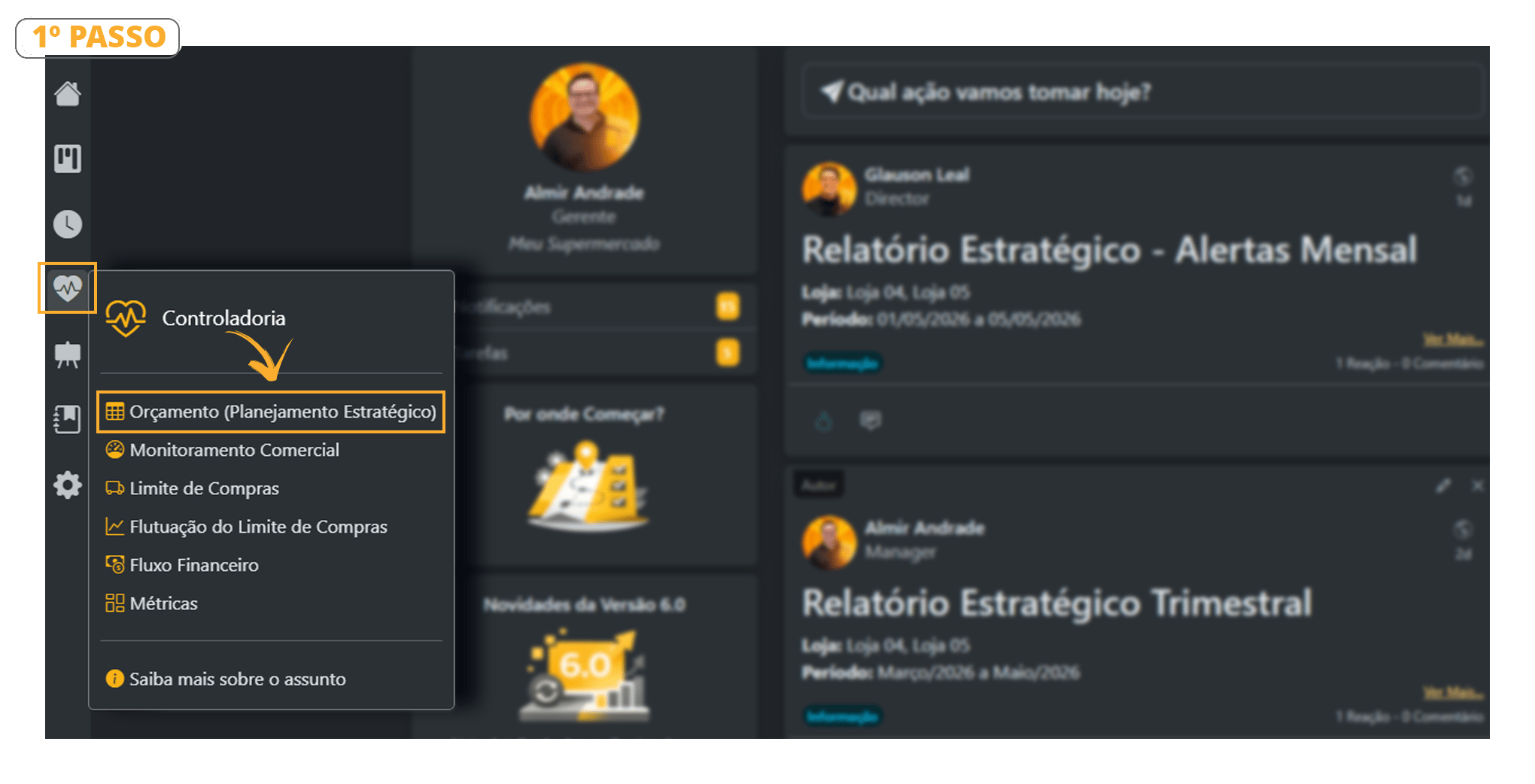
Follow the step-by-step instructions below to export a Budget.- Controllership > Budget
- Select the store whose Budget you want to Export. The Export button only appears after you select a store.
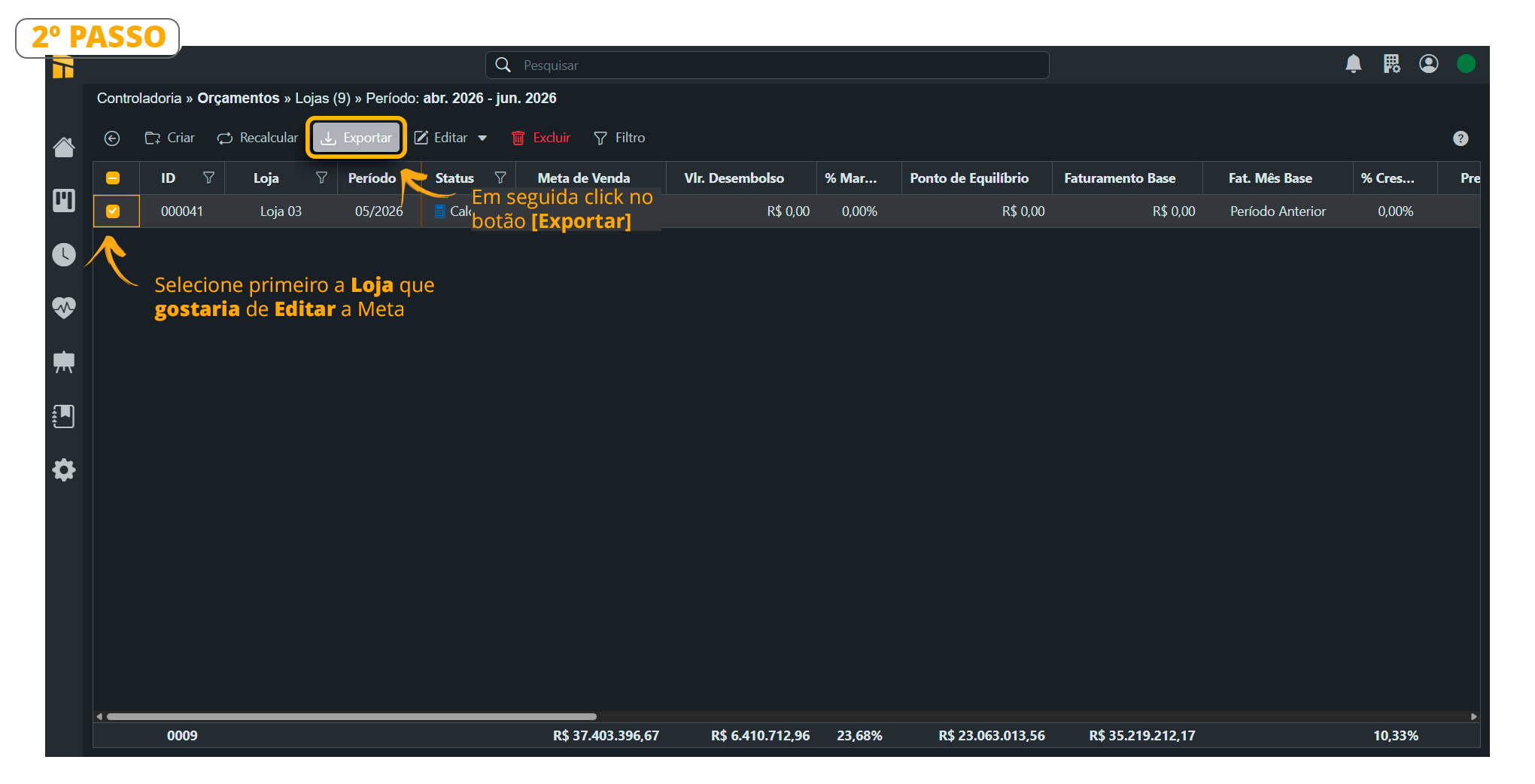
- You can select more than one store at the same time. Click the Export button.
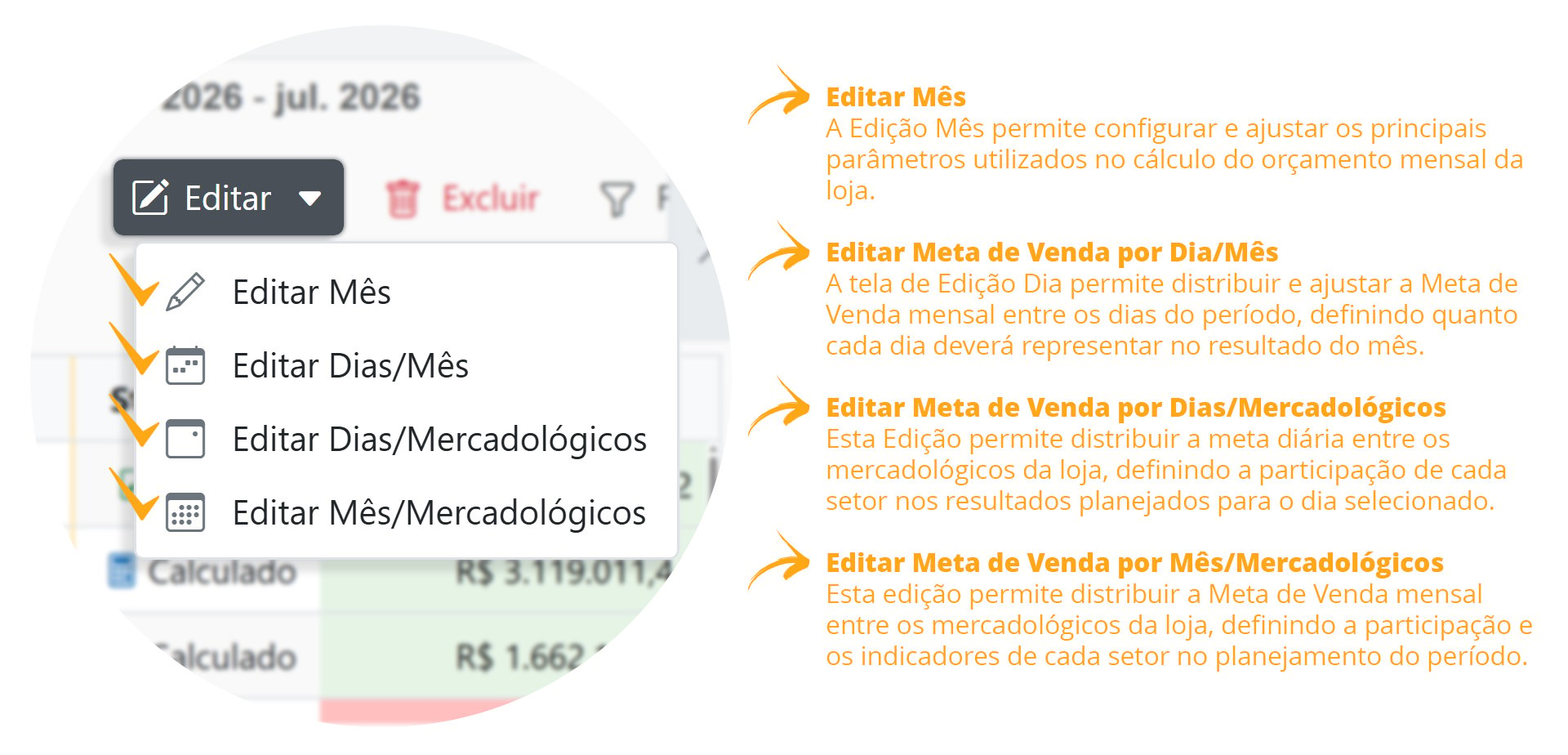
4 Ways to Edit Sales and Commercial Category Targets
There are four ways to Edit Sales Targets. See the details of each method below.
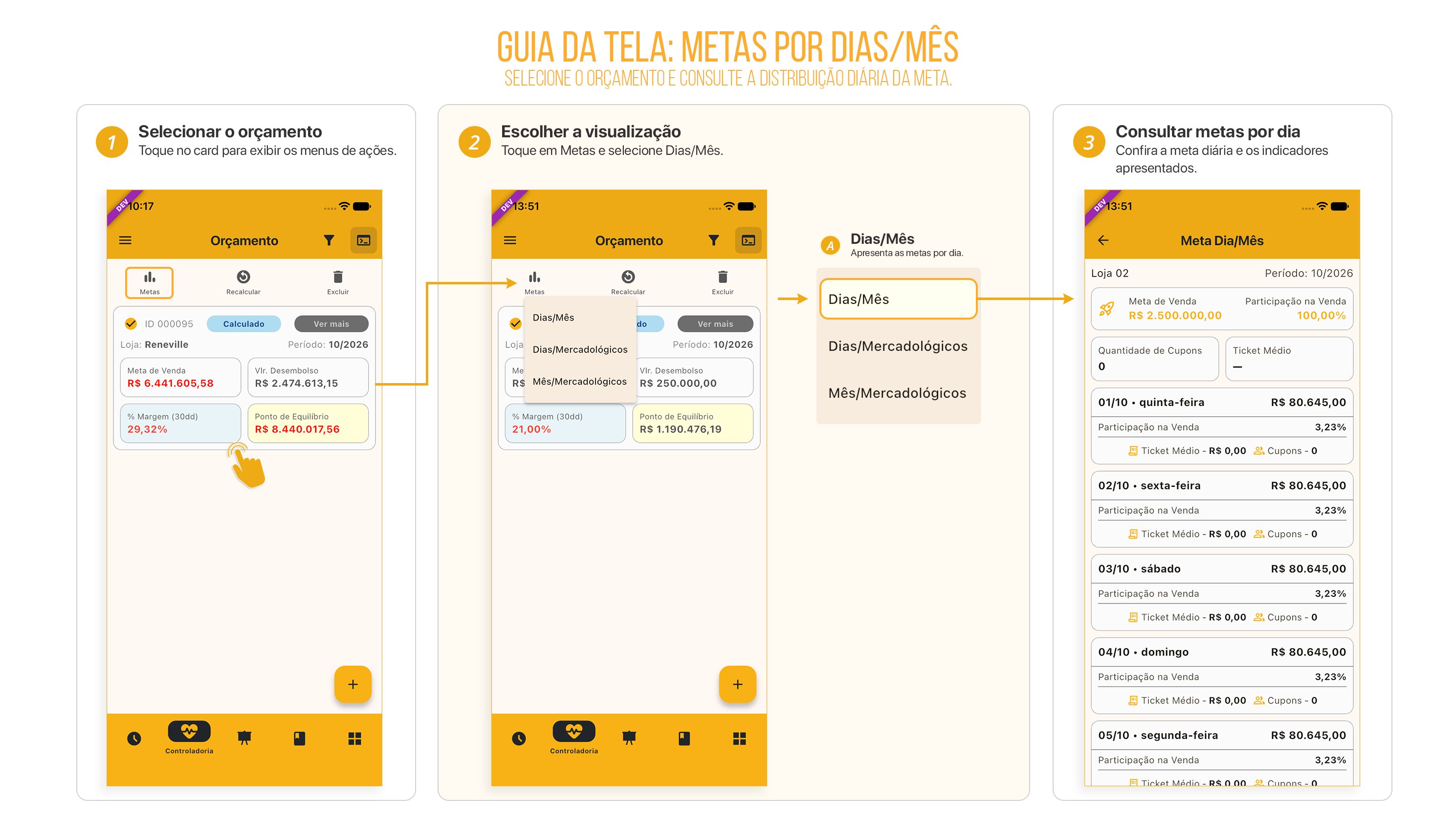
How to Edit Sales Targets by Day/Month
Click here to watch the Complete Editing Video.Follow the steps shown in the images below.- Controllership > Budget
- Click Edit and select one of the editing options. In the example below, we are editing by Day/Month.
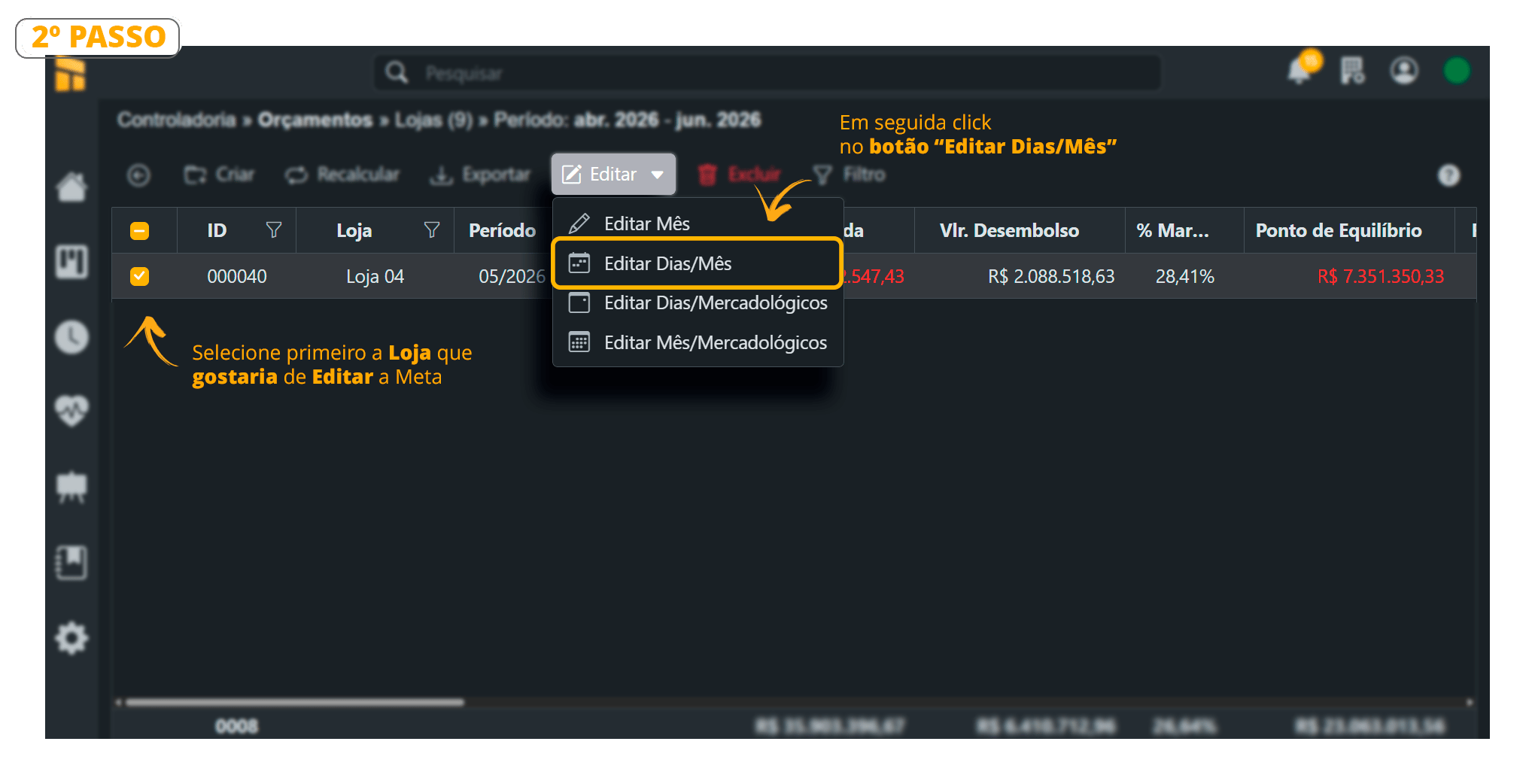
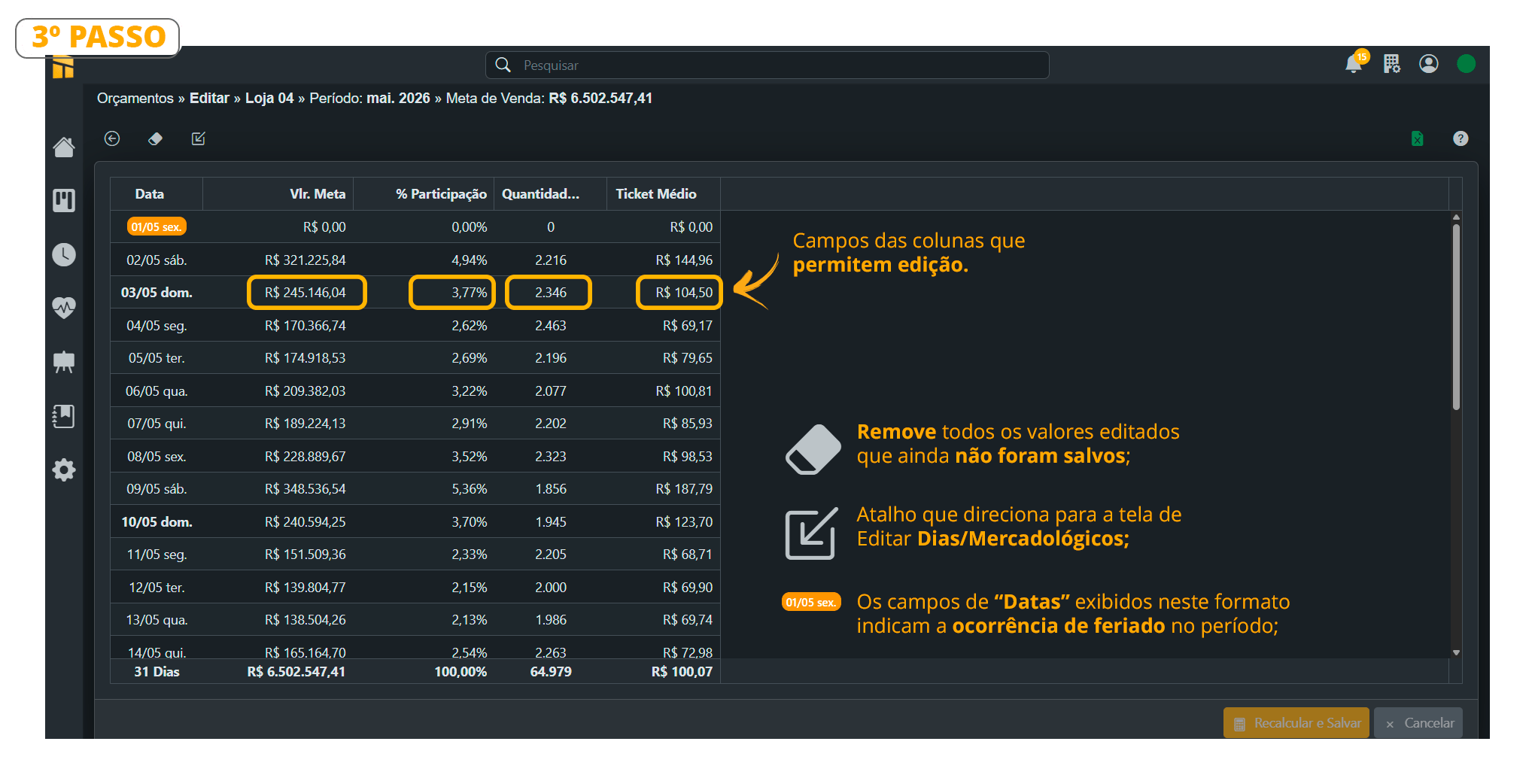
- This screen allows you to manually adjust the indicators used to distribute the daily Sales Target, making it possible to adapt the plan according to holidays, seasonality, special events, or specific sales strategies.
The system automatically recalculates the changed values, maintaining the consistency of the budget for the period.
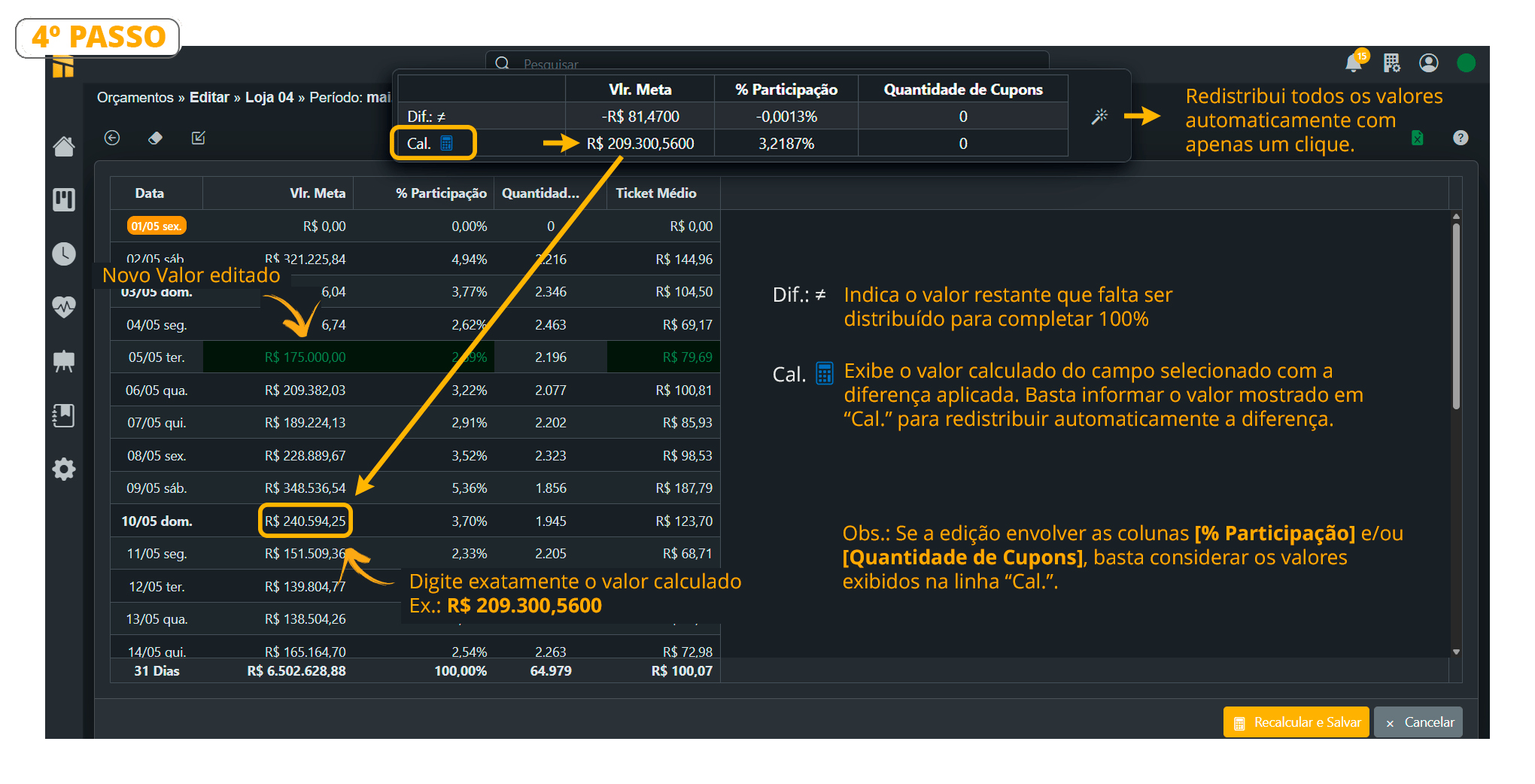
- This feature automatically redistributes the values after a manual change, ensuring that the total target remains at 100% and that the indicators remain consistent. When you edit a value, the system automatically calculates the resulting difference and provides options to redistribute the balance among the remaining records.
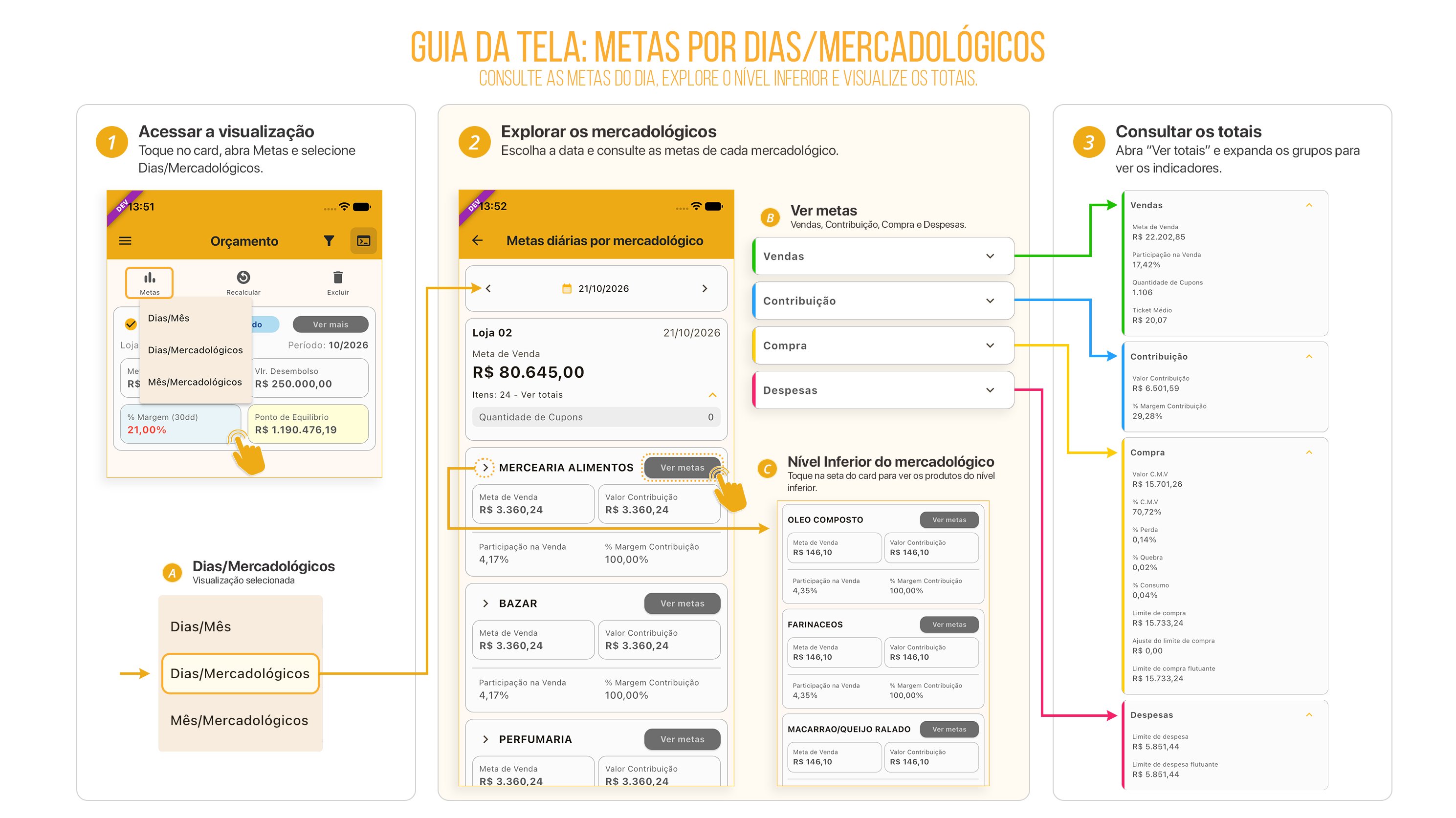
How to Edit Sales Targets by Day/Commercial Category
Click here to watch the Complete Editing Video.- Controllership > Budget
- Click Edit and select one of the editing options. In the example below, we are editing by Day/Commercial Category.
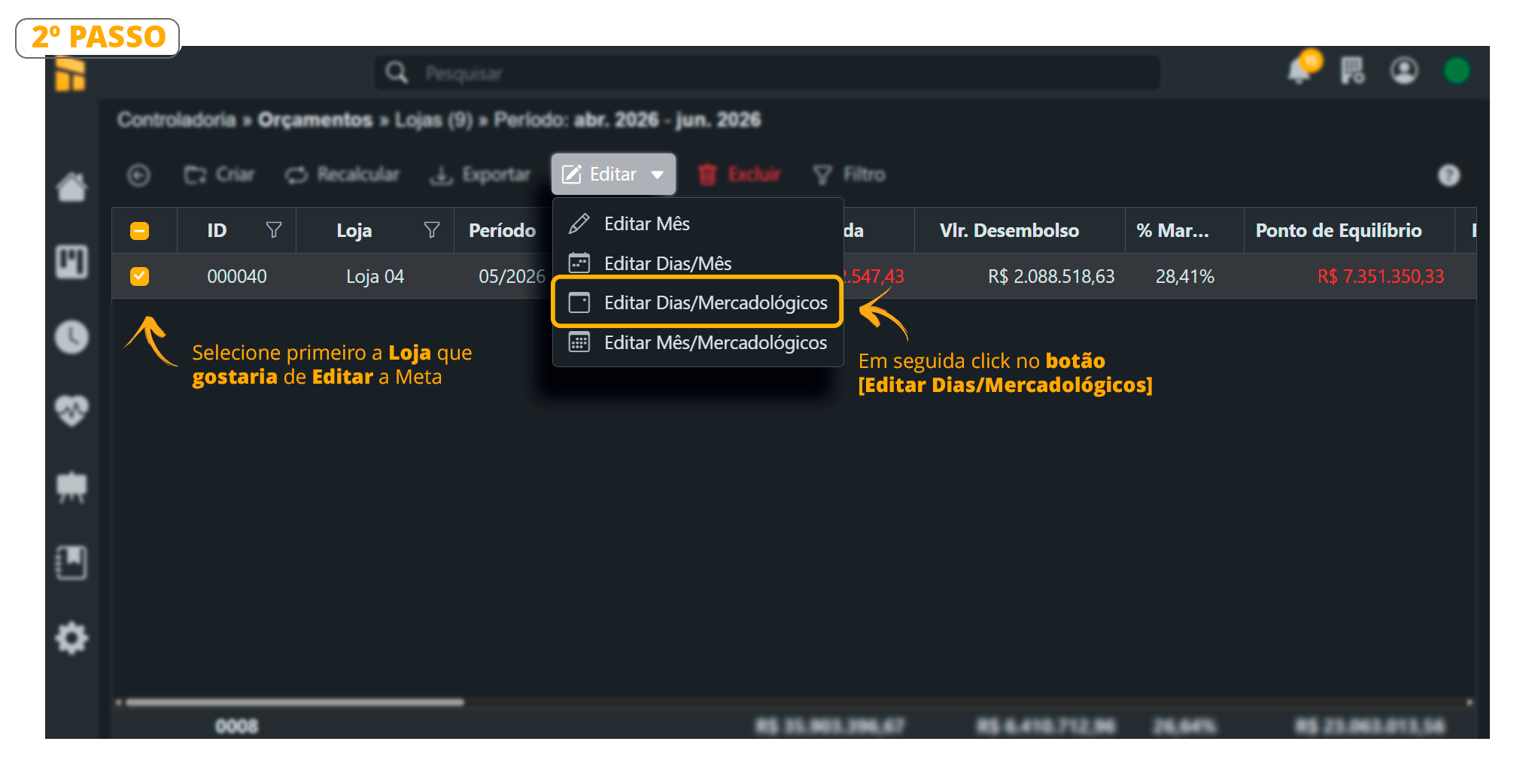
- See the columns that can be edited below.
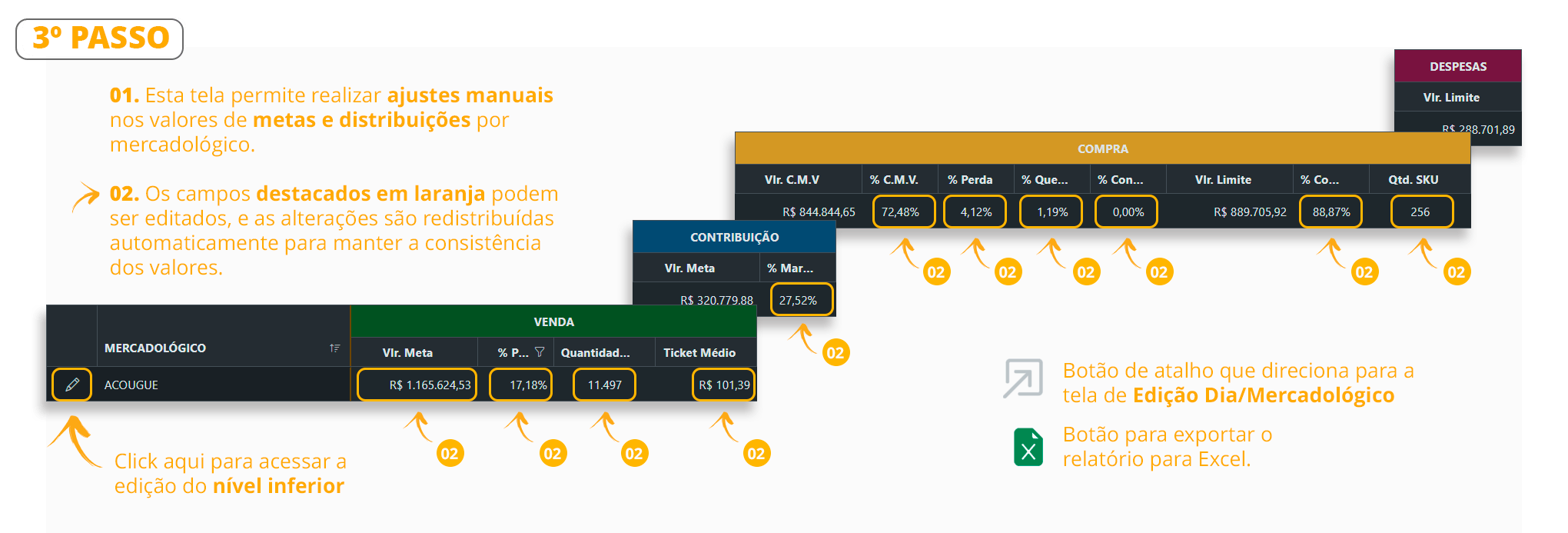
- See the editing process below.
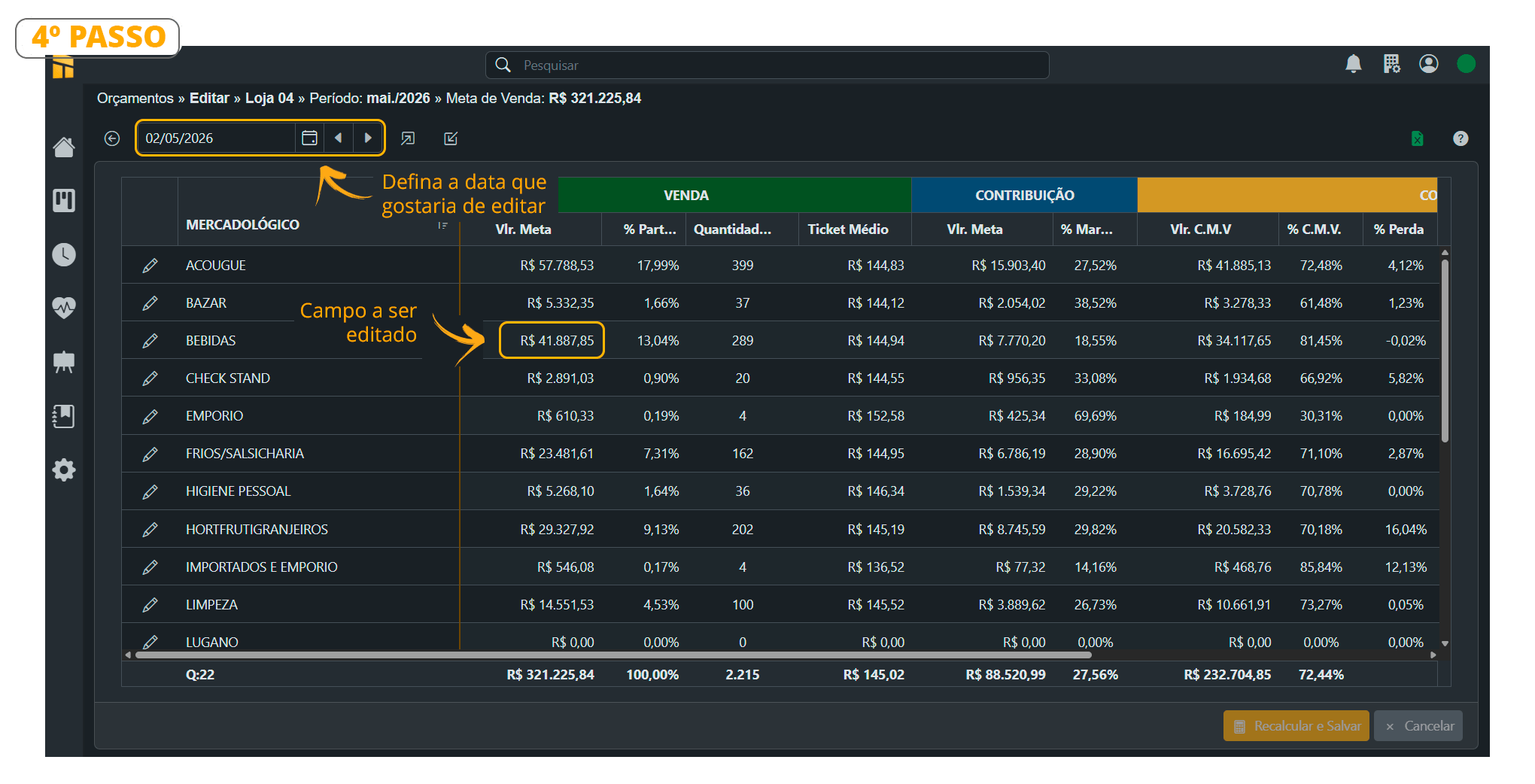
- See the target editing and redistribution process below.
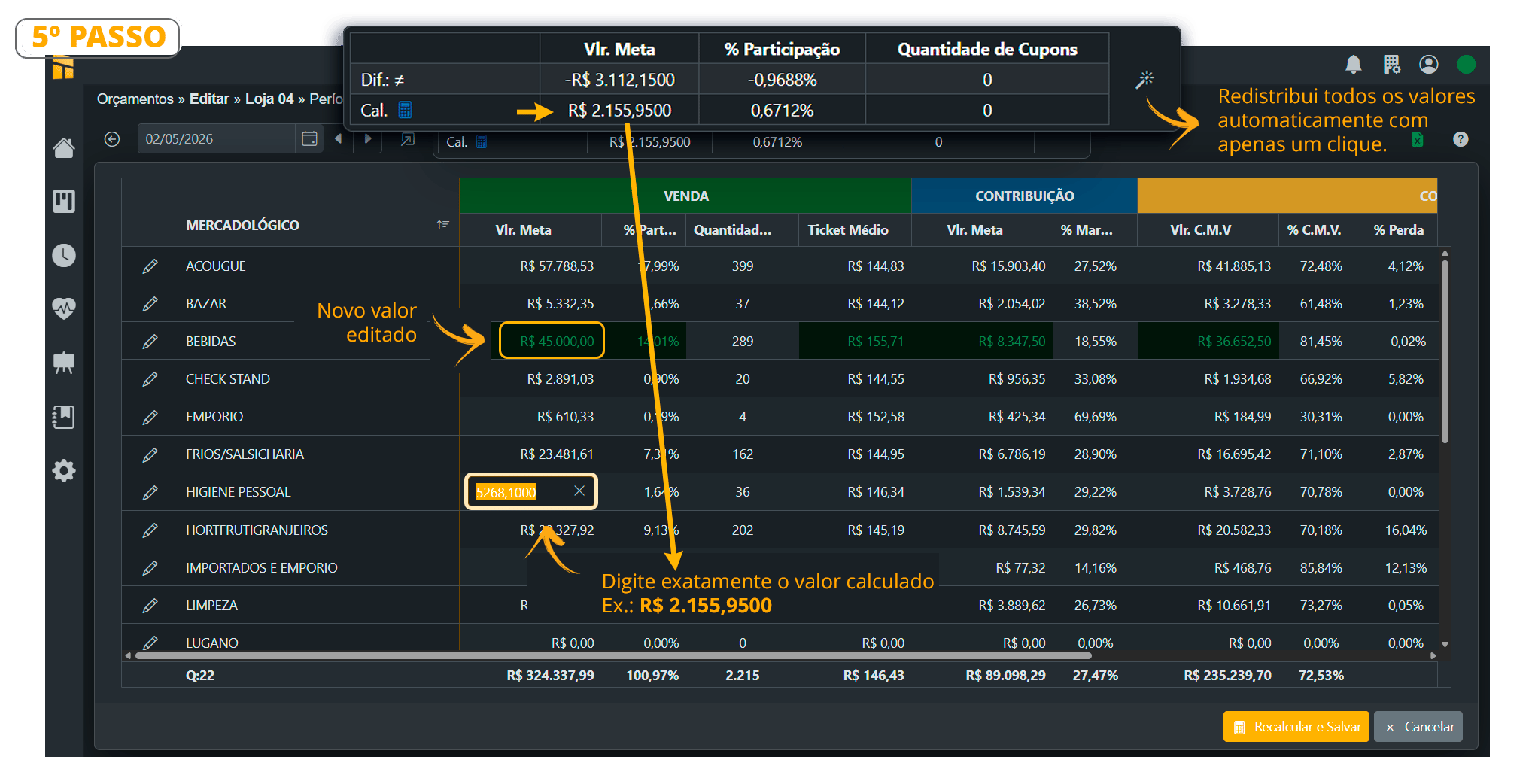
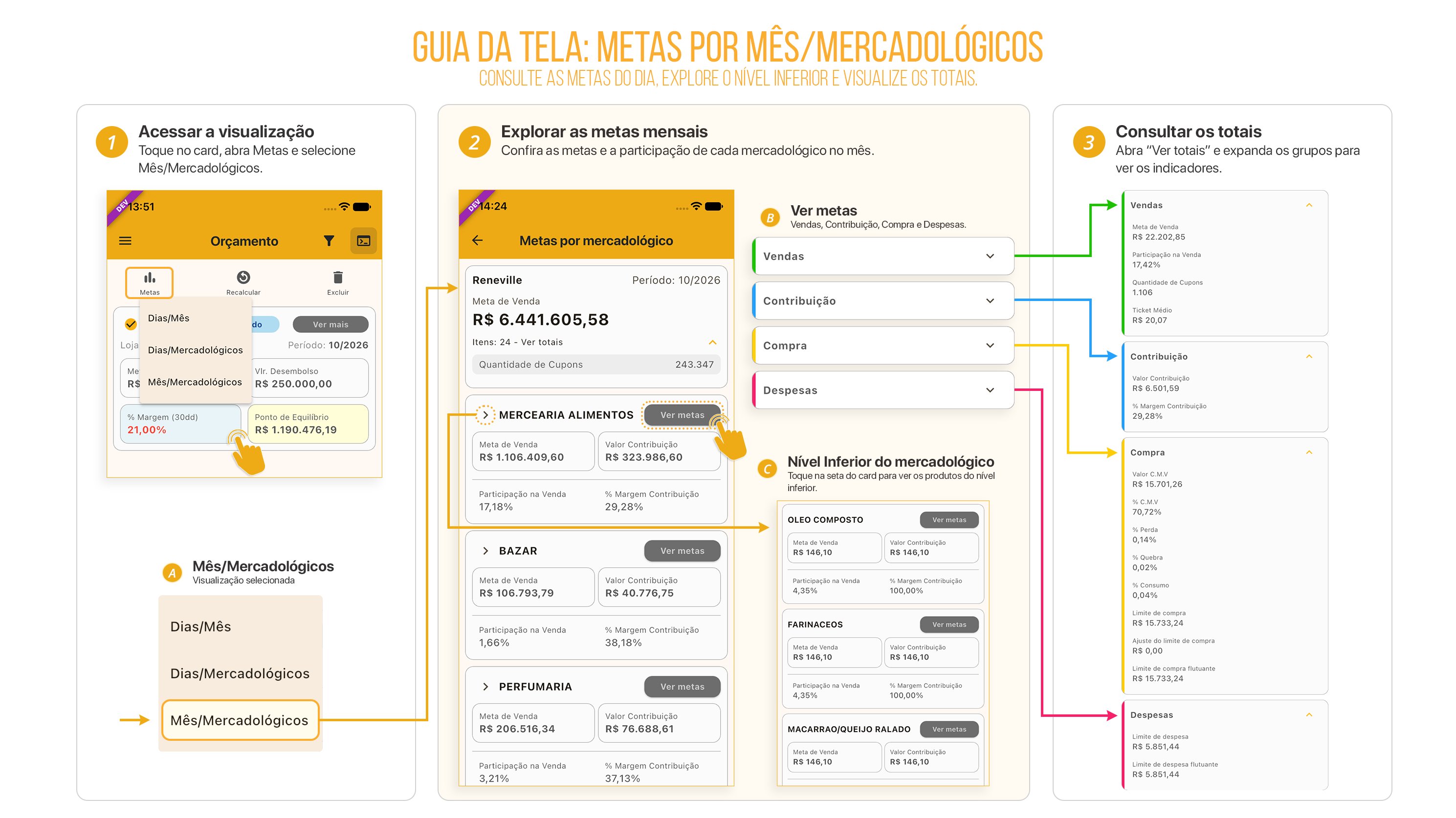
How to Edit Sales Targets by Month/Commercial Category
Click here to watch the Complete Editing Video.Follow the steps shown in the images below.- Controllership > Budget
- Select the store you want to Edit and choose the editing method shown in the image below.
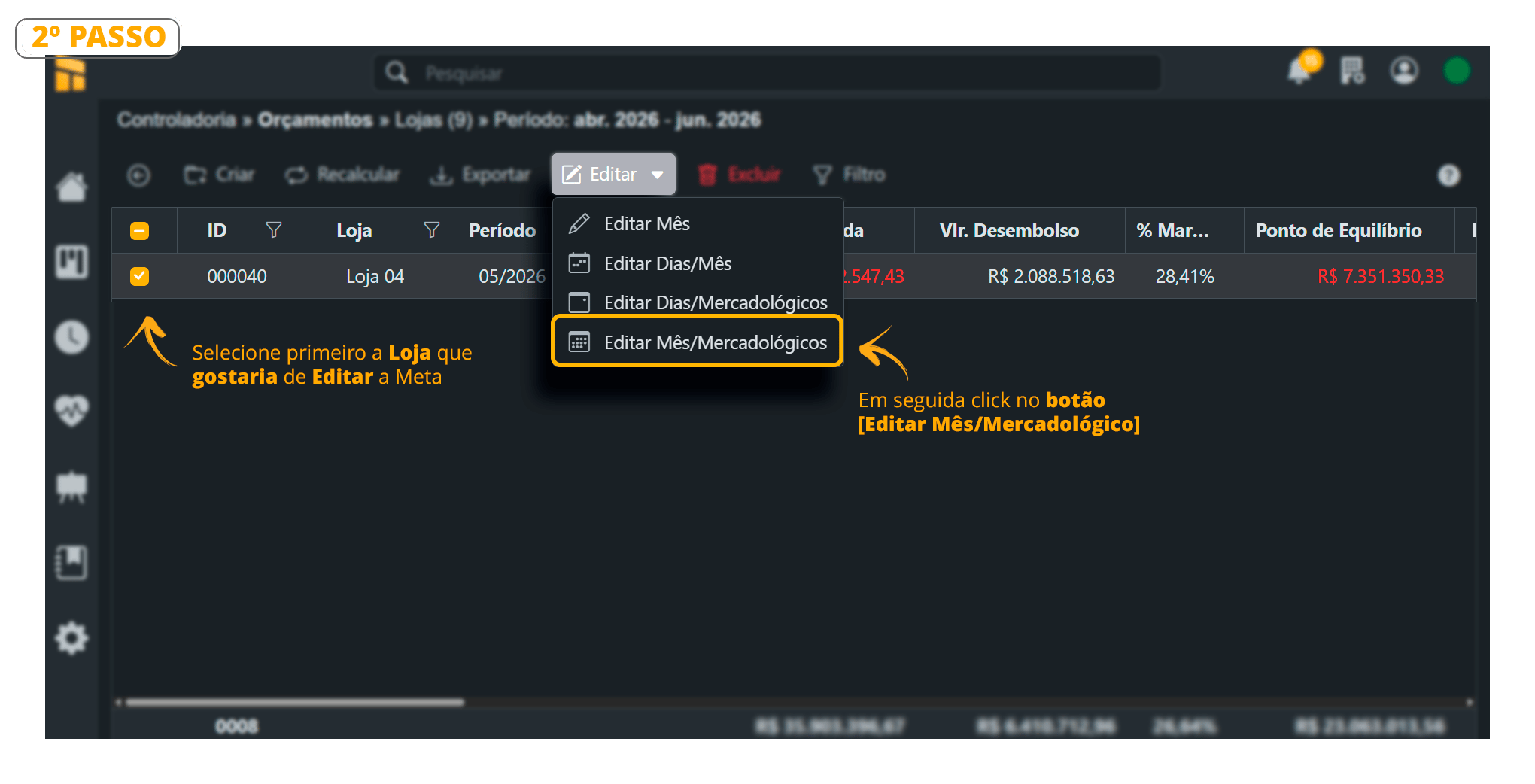
- See the columns that can be edited below.
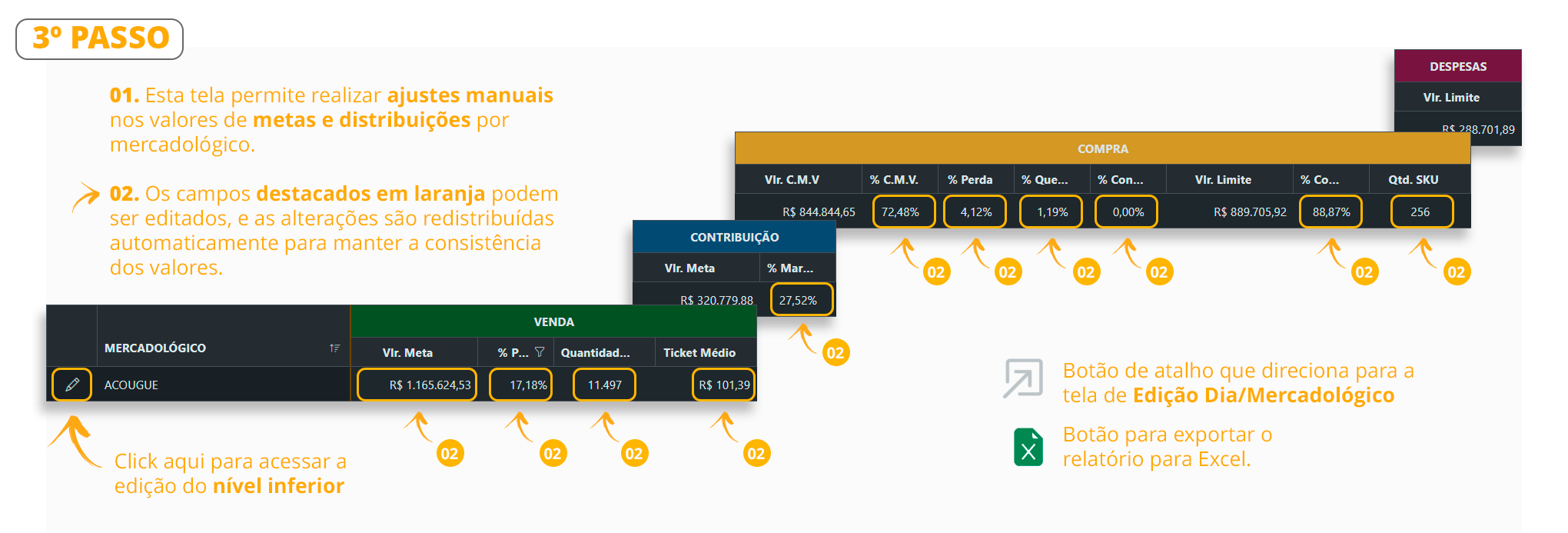
- See the editing process below.
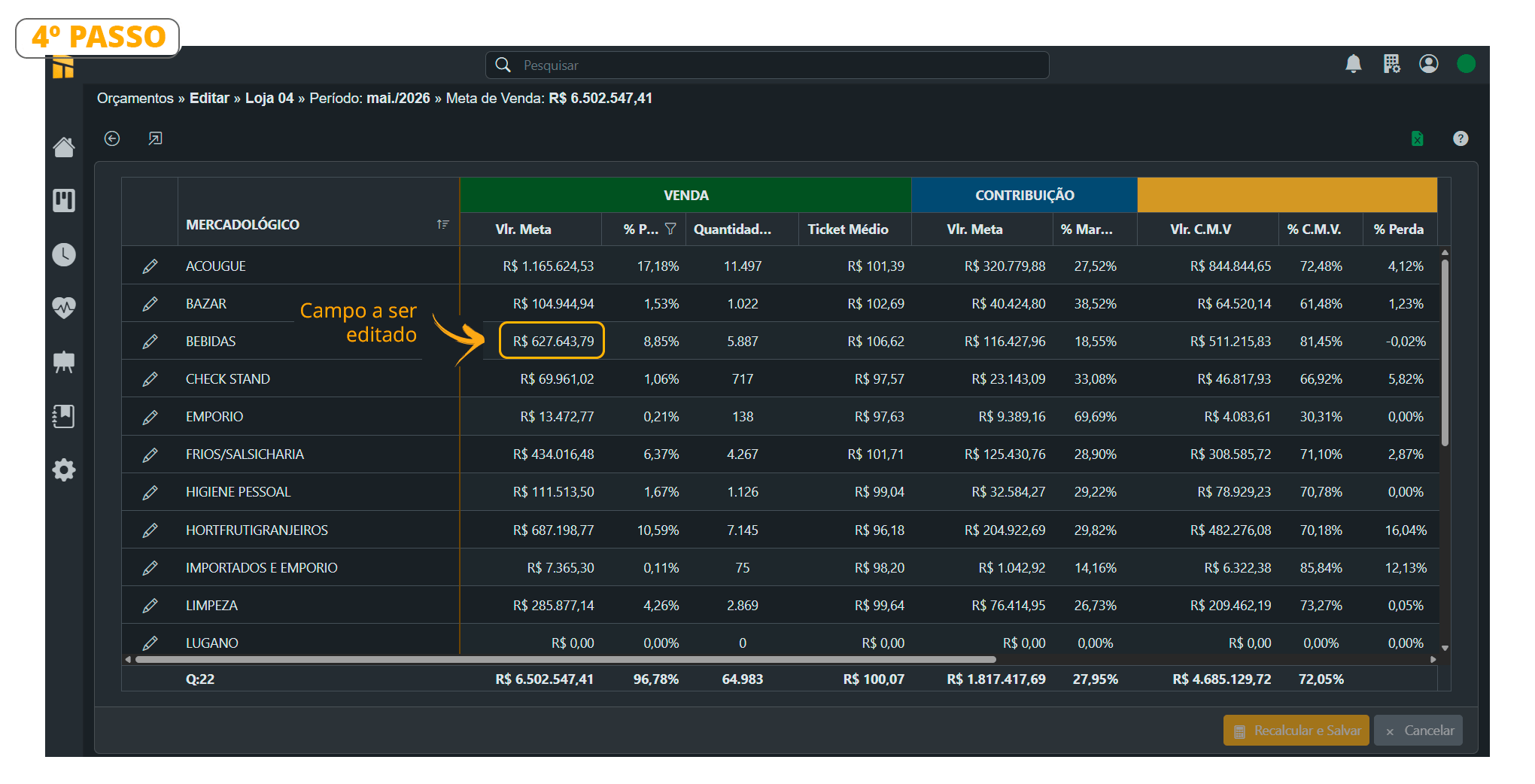
- See how to edit the values in the example below.
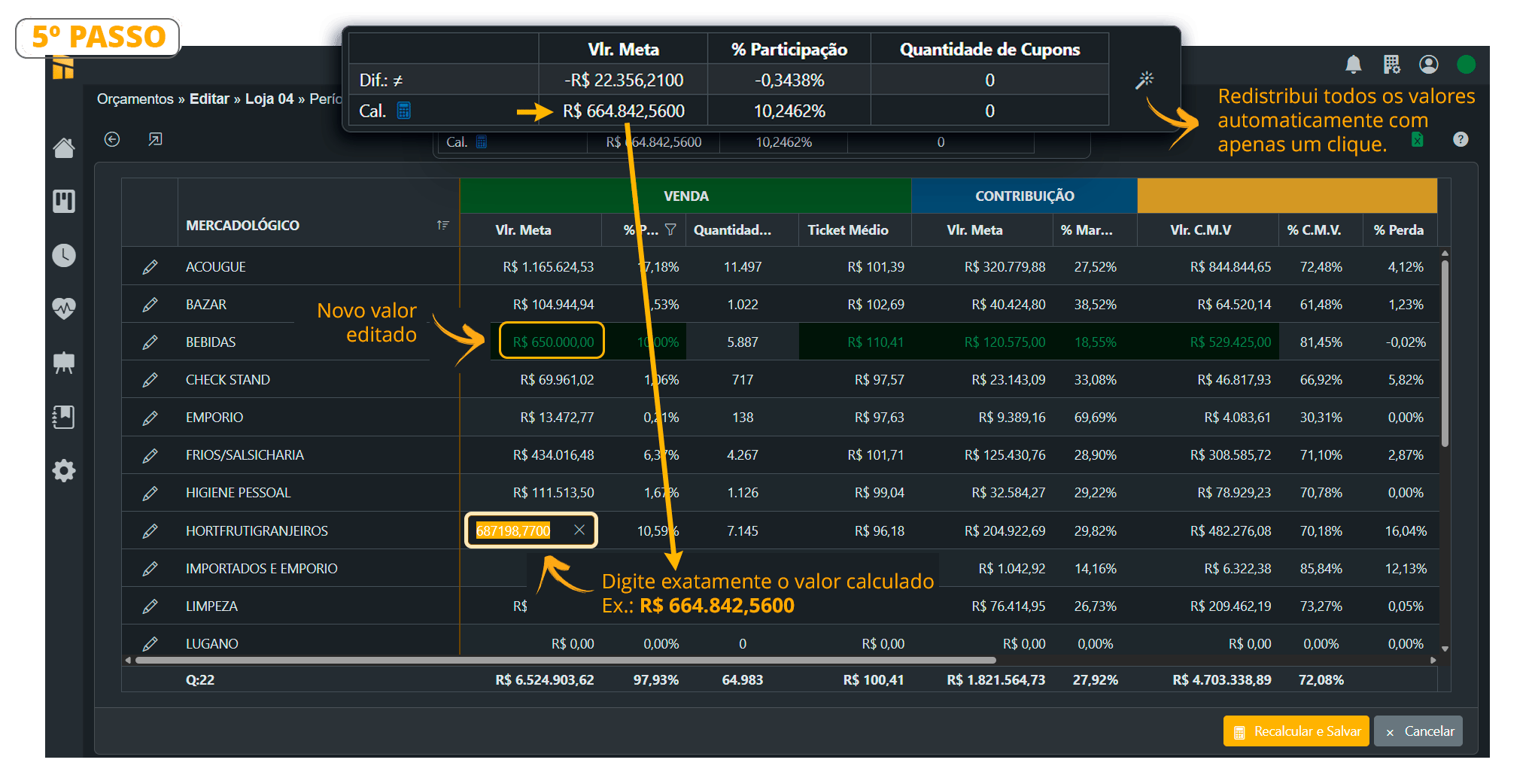
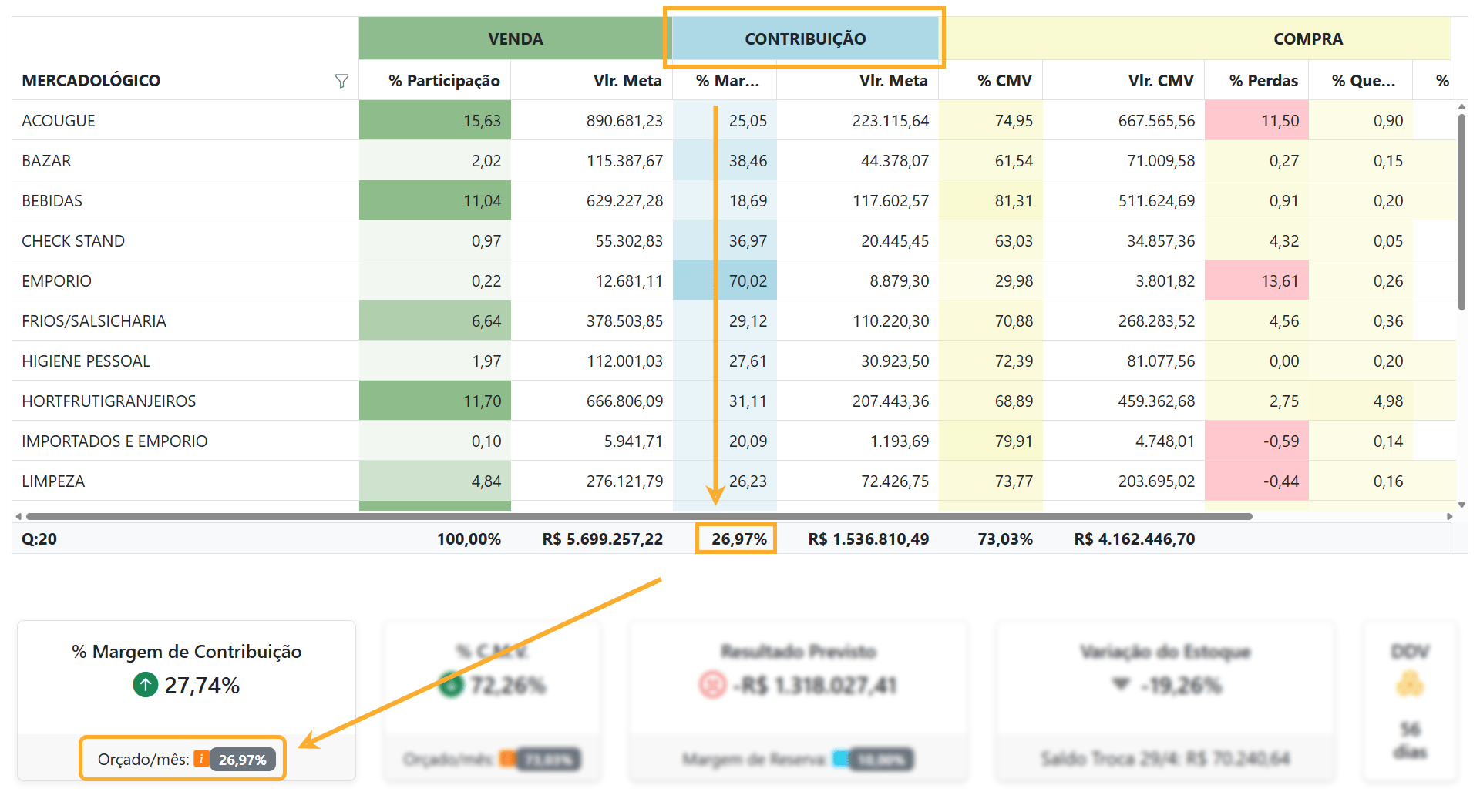
Average Margin (Budget) vs. % Contribution Margin
When calculating the Average Margin while Creating the budget, Controller360 provides the average from the previous two months, or the customer can enter the desired margin. This margin is used to calculate the Break-Even Point.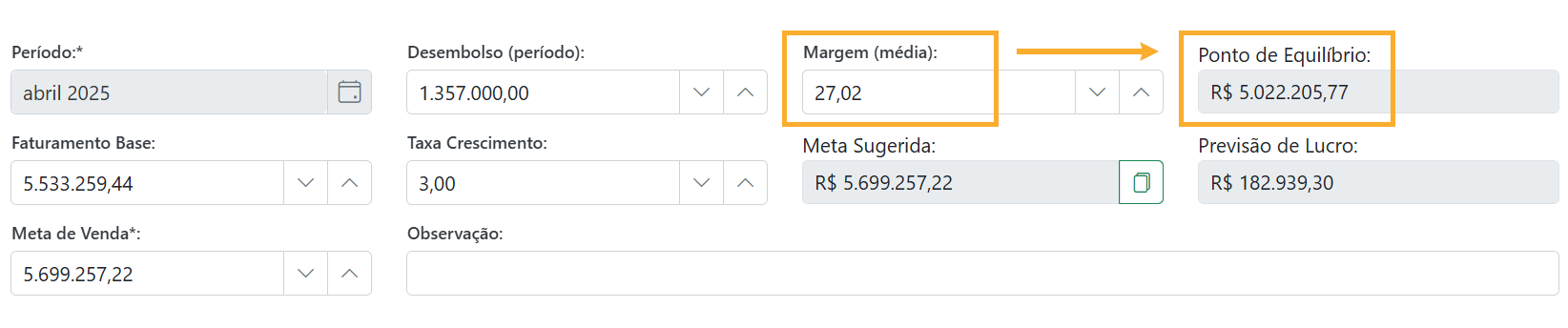
Verify Controller360 Expenses Against ERP
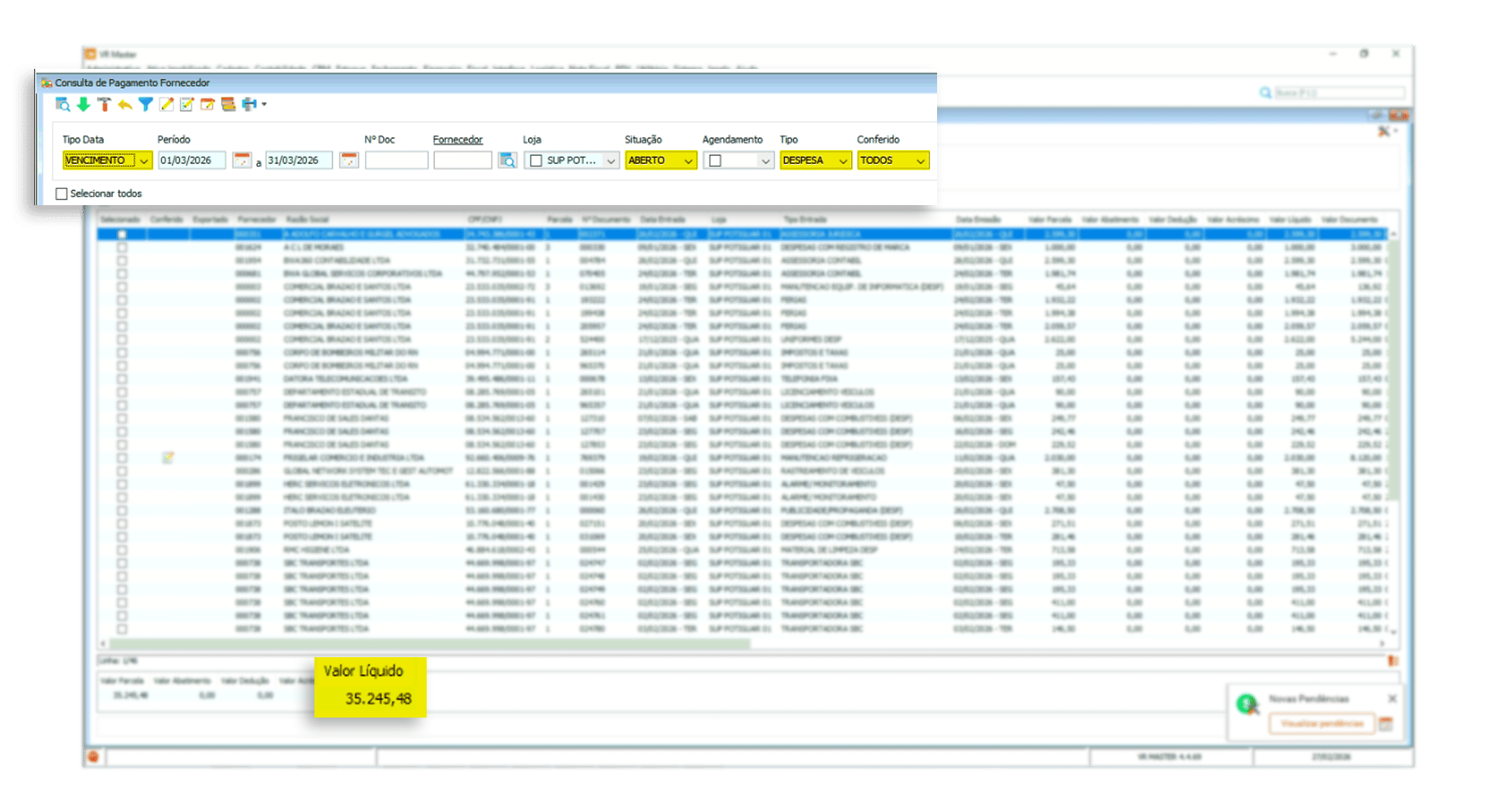
See the Disbursement field below, where expenses entered in the ERP are displayed.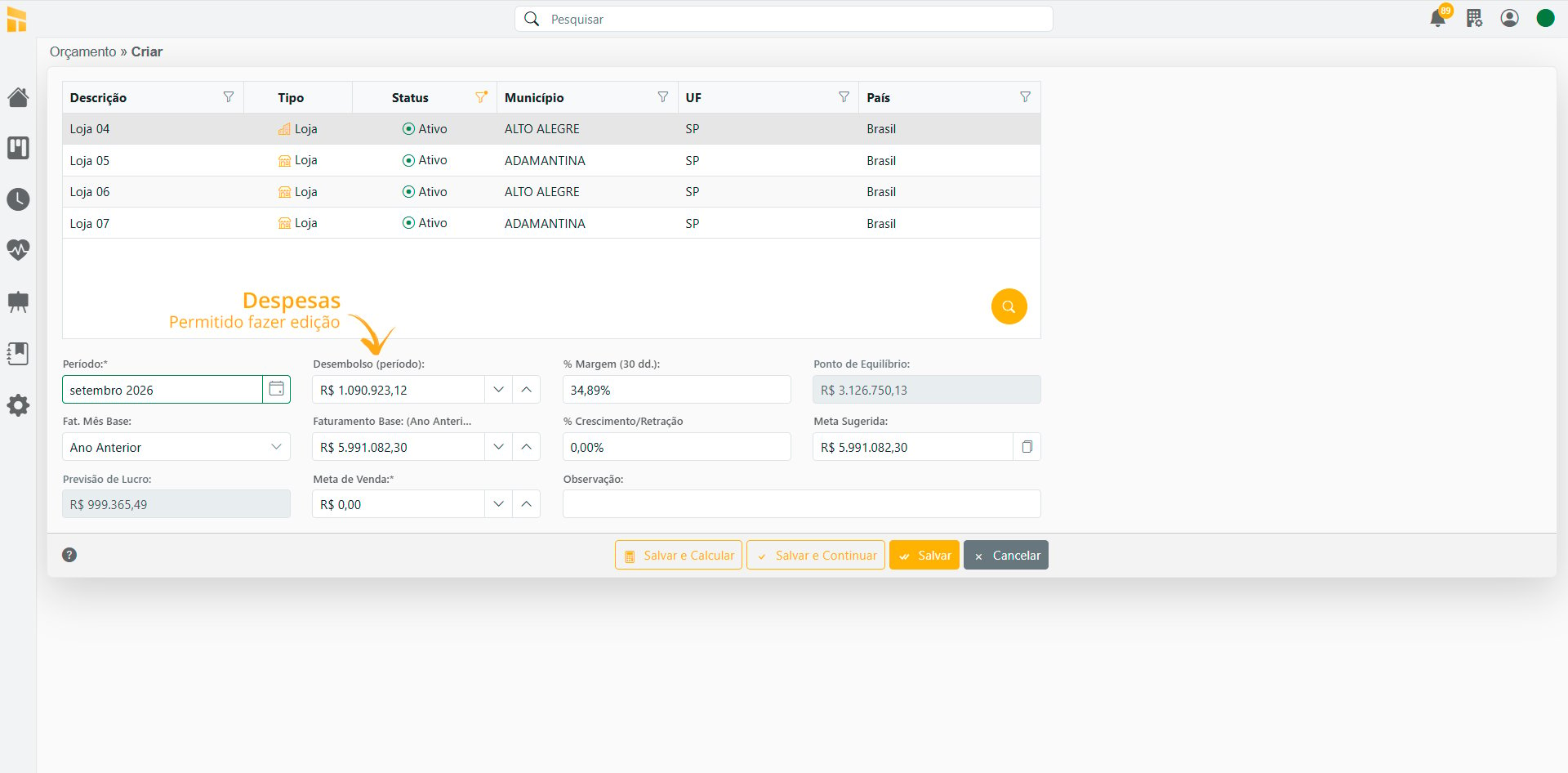
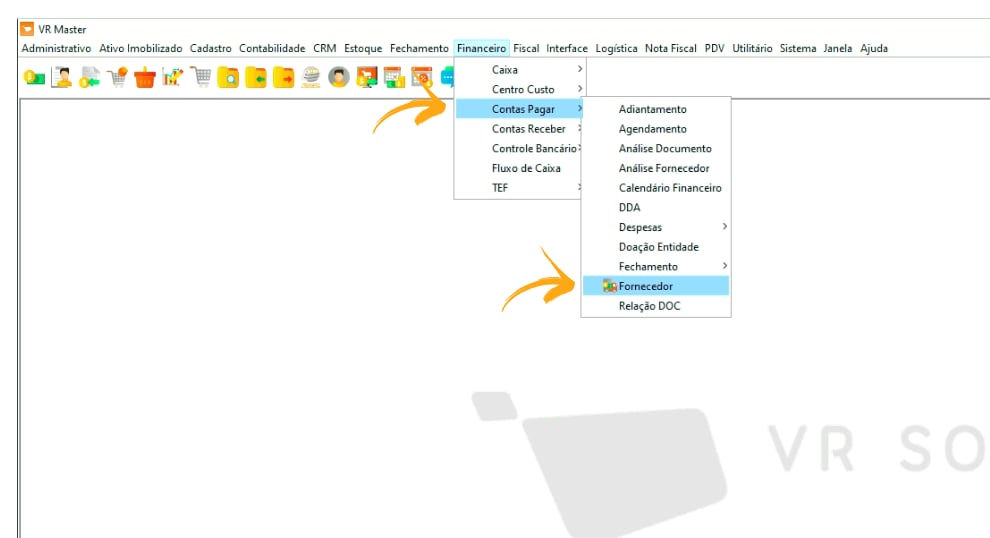
Financial / Accounts Payable / Supplier